RESEARCH NOTES
The George Ryan Archaeological Thrillers
Every mystery begins with a question.
Explore the ideas, legends, archaeological discoveries and unanswered questions that inspired the George Ryan adventures.
Explore the ResearchBefore the Story
Before George follows the clues, I have to.
Every George Ryan novel begins with a question. Sometimes it comes from an archaeological discovery. Sometimes from an old legend. Sometimes from a place I have visited that refuses to leave my imagination.
These notes explore the real history, mysteries, theories and discoveries that helped shape the adventures. They are not intended to provide every answer. Instead, they trace the path from an intriguing idea to the fictional mystery that eventually finds its way into a George Ryan novel.
Here you can follow the research behind the books, discover the historical questions that inspired key scenes and explore the places, people and stories that made each adventure possible.
Featured Research
Questions that became adventures
Three of the historical and geographical questions that helped launch the mysteries at the heart of the series.
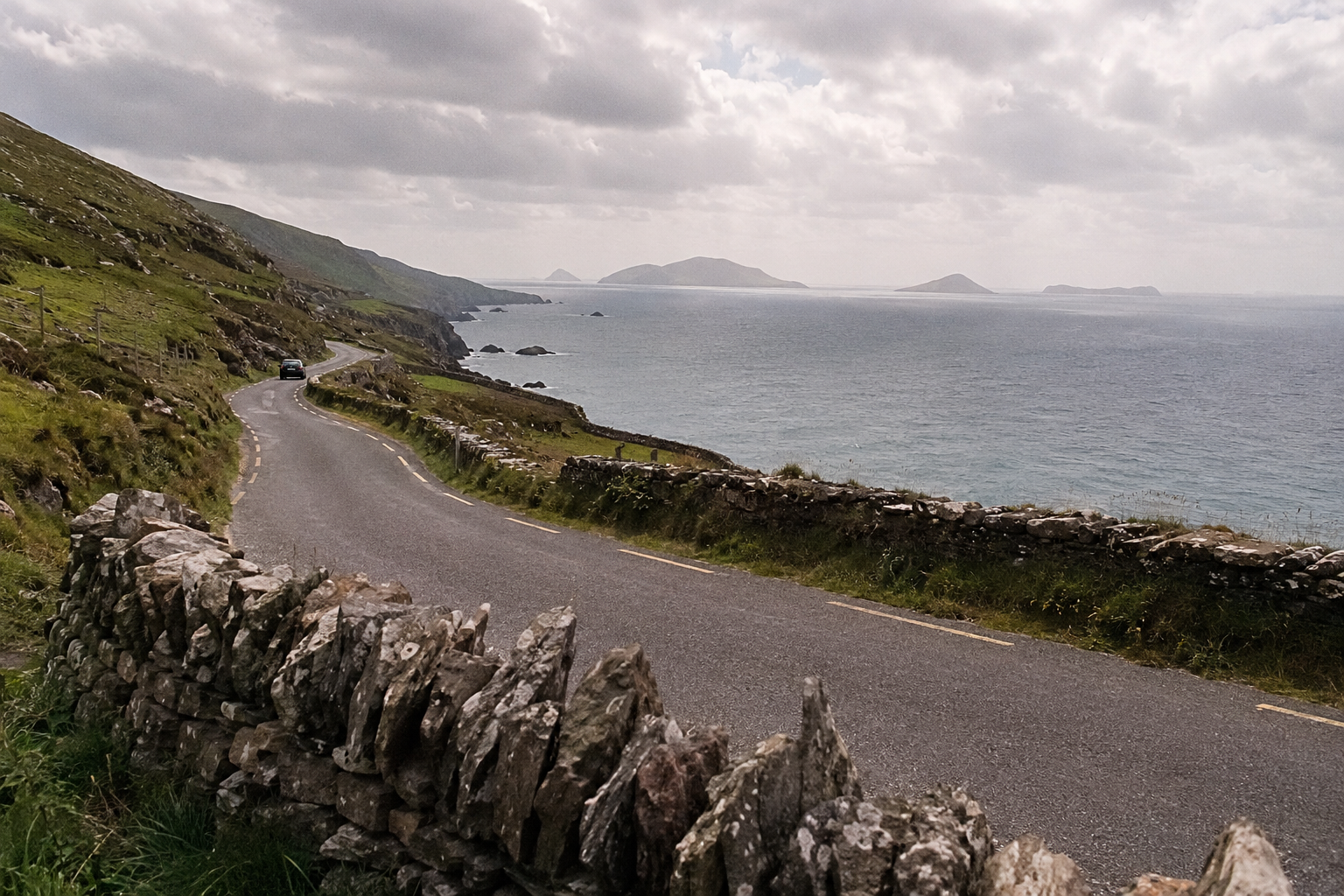
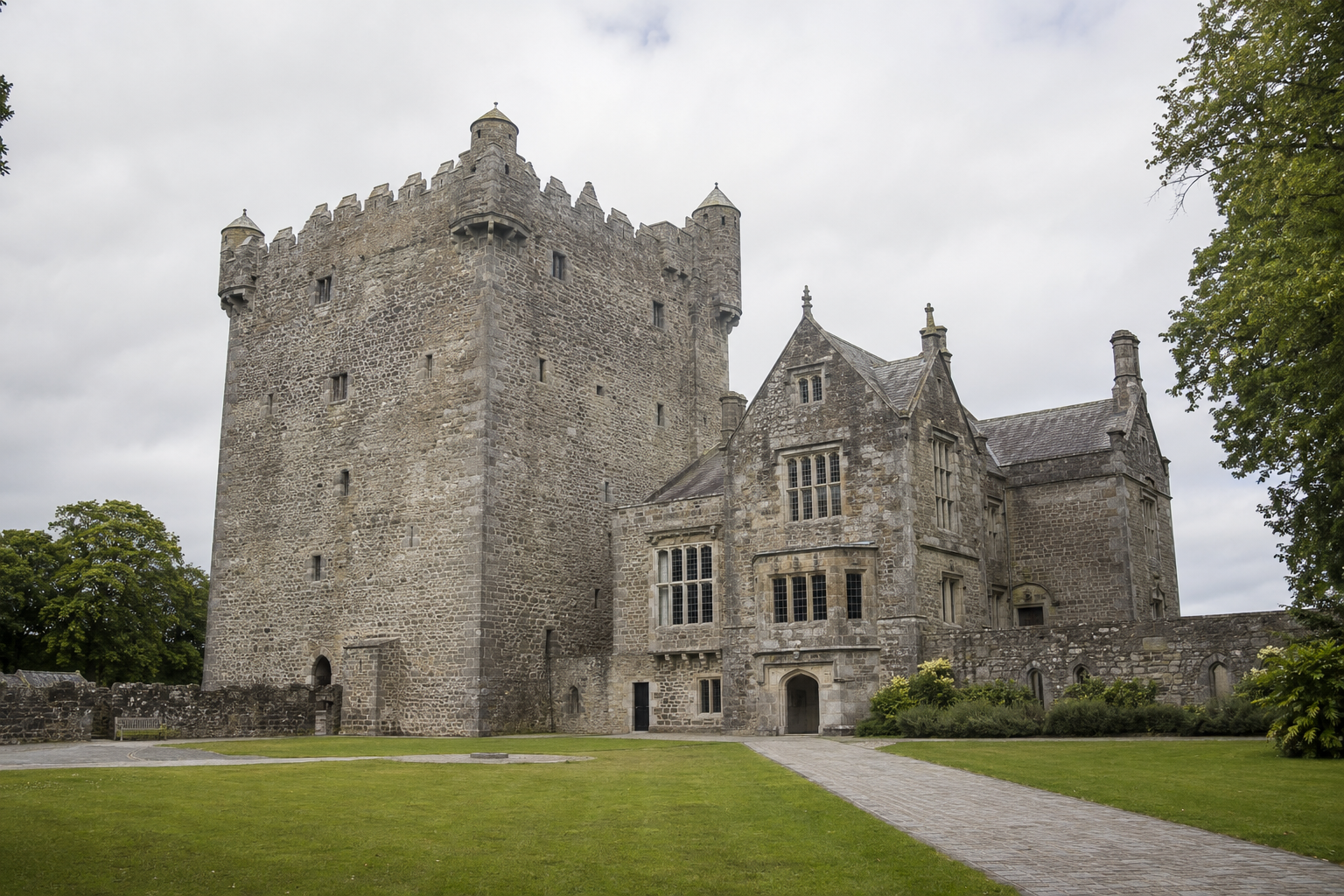
The Brandon House
Did Irish Monks Reach the Americas?
Stories of St. Brendan and the monks who sailed west into the Atlantic helped inspire a mystery stretching from the Dingle Peninsula to Peru.
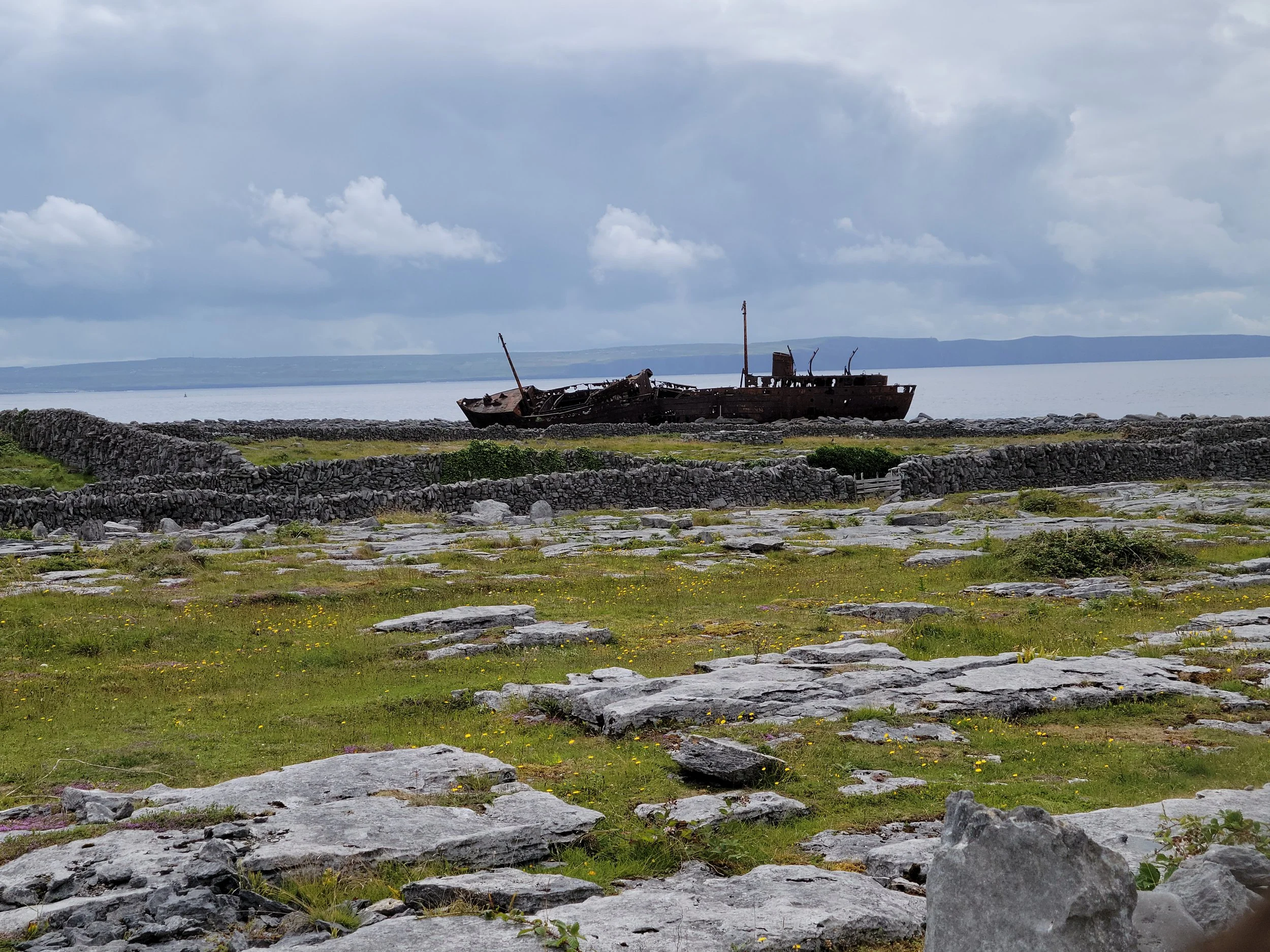
The Atlantis Enigma
The Real Mystery Behind Atlantis
Plato's account has survived for more than two thousand years, leaving readers to wonder whether it was history, allegory or a memory of something now lost.
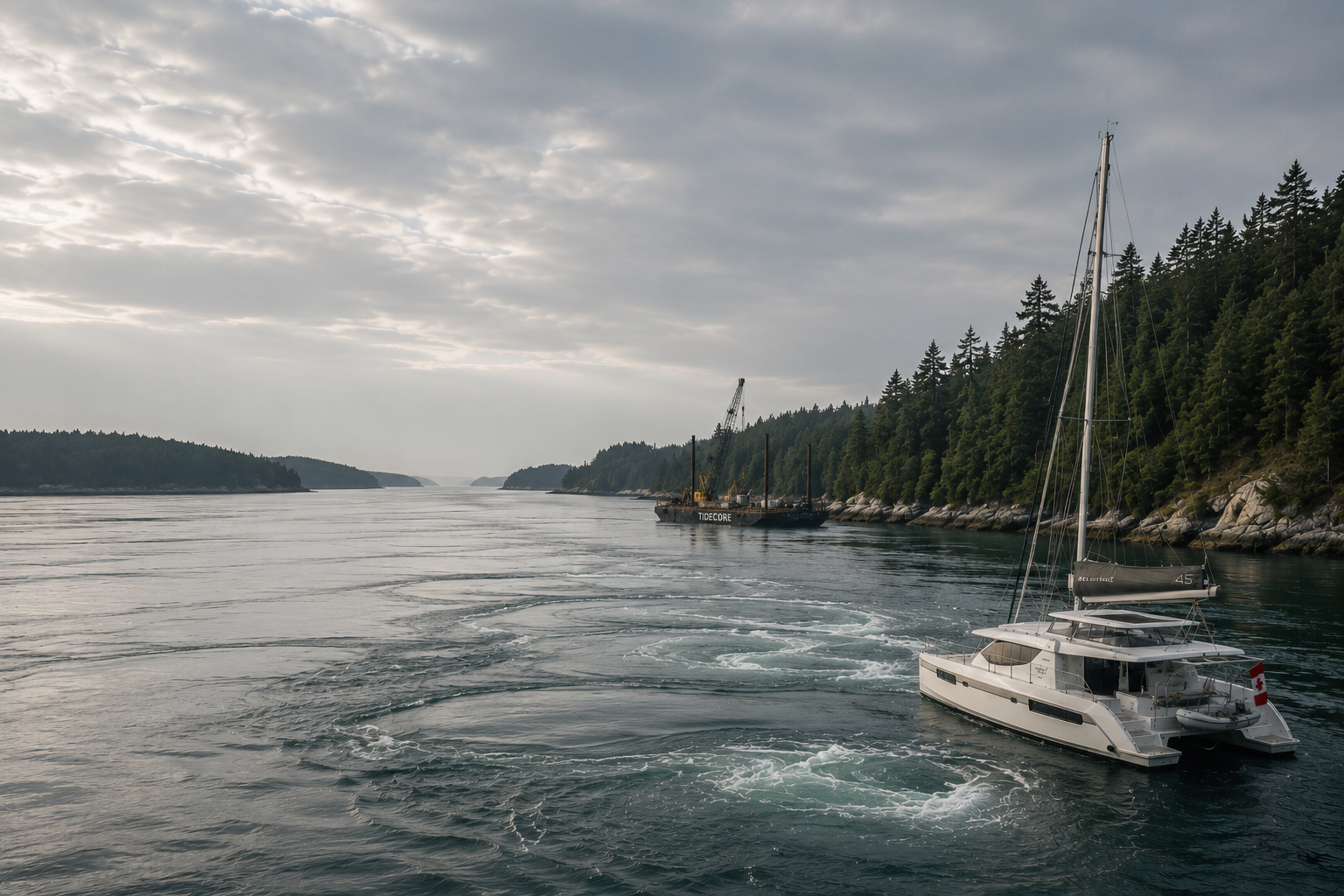
The Tofino Deception
Why Seymour Narrows Was Feared
Powerful currents, submerged hazards and the history of Ripple Rock made Seymour Narrows one of the most dangerous passages on Canada's Pacific coast.
The Research Archive
Explore the research behind each novel
Open any research note below to explore the history, archaeology, legends, landscapes and unanswered questions that helped shape the George Ryan adventures.
Book One
The Brandon House
Did Irish monks reach the Americas?
One of the questions that first drew me into the story of The Brandon House was whether Irish sailors could have crossed the Atlantic centuries before the better-known voyages of the Norse.
The legend of St. Brendan the Navigator describes a sixth-century Irish monk who sailed west with a small group of companions in search of the Promised Land of the Saints. The surviving account was written down much later and mixes religious allegory with descriptions of islands, volcanic landscapes, ice, sea creatures and unfamiliar coastlines.
There is no accepted archaeological proof that Brendan reached North America. What fascinated me was that the idea was not physically impossible. Traditional skin-covered boats were capable of long voyages, and Atlantic currents, weather patterns and island chains could provide a route westward.
From the research to the novel: The question became the starting point for a much larger fictional possibility: what if evidence of an ancient Irish voyage had survived in a place no one expected to find it?
St. Brendan and the culture of Atlantic exploration
St. Brendan was only one figure within a wider Irish tradition of religious travel. Early monks often sought isolated islands where they could establish communities, live simply and pursue a life of contemplation.
These journeys were acts of faith, but they were also acts of navigation. The sailors had to understand wind, stars, currents, bird movements and the behaviour of the sea. Places such as Skellig Michael demonstrate how far early monastic communities were prepared to travel in search of isolation.
The image of a small craft leaving the Irish coast and moving into the open Atlantic became central to the mood of The Brandon House. It represented both the courage required to explore and the uncertainty surrounding the evidence left behind.
From the research to the novel: The surviving legends allowed the story to ask where belief ends, where history begins and what might remain buried between the two.
The Moche civilization of northern Peru
The Moche flourished along the northern coast of Peru centuries before the rise of the Inca. They developed large ceremonial centres, extensive irrigation systems, complex political structures and a distinctive artistic tradition.
Their ceramics are particularly remarkable. Moche artists portrayed rulers, warriors, animals, rituals, illness, domestic life and religious figures with an extraordinary degree of detail. Because the Moche left no known written language, these objects have become one of the main ways archaeologists attempt to understand their society.
The absence of a written record leaves space for questions. Archaeologists can uncover buildings, burials and images, but the beliefs and stories behind them must often be reconstructed from incomplete evidence.
From the research to the novel: This uncertainty made the Moche world the perfect setting for a fictional discovery that could challenge assumptions about contact between ancient cultures.
Viracocha and the stranger from the sea
Viracocha appears in Andean traditions as a creator figure associated with civilization, order and journeys across the landscape. Later retellings sometimes describe him as a bearded traveller who arrived from the sea and eventually departed across it.
These descriptions have been repeatedly taken out of their cultural context and used to support speculative theories about foreign visitors. There is no reliable evidence that Viracocha was an Irish monk, a European traveller or a representative of some forgotten civilization.
What interested me was not proving one of those theories. It was the way legends change as they are retold, translated and interpreted by people with different expectations. A symbolic figure can gradually become a historical visitor in the popular imagination.
From the research to the novel: The legend provided a believable point where mythology, interpretation and fictional evidence could collide.
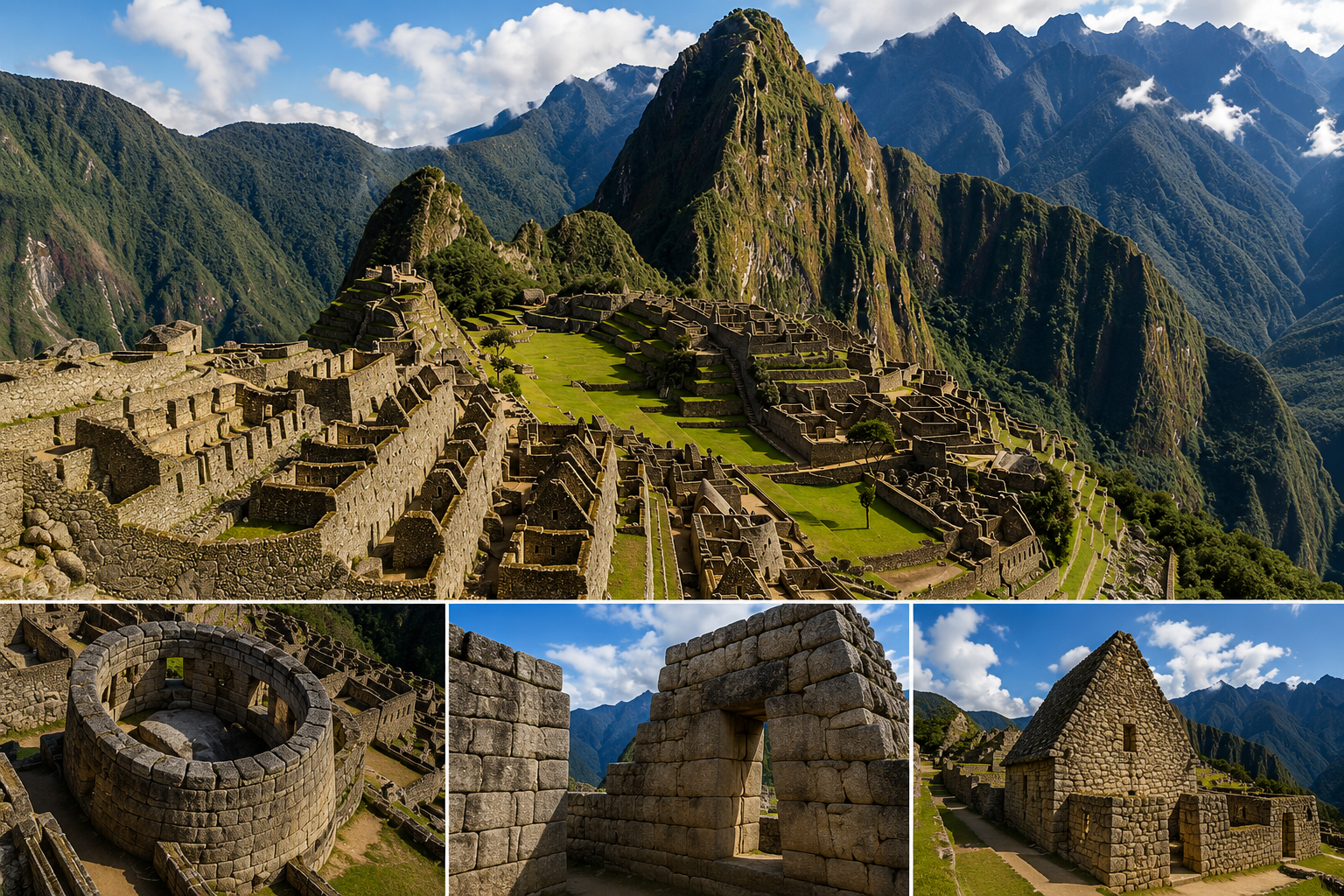
Machu Picchu beyond the postcard
Machu Picchu is one of the most recognizable archaeological sites in the world, yet photographs rarely communicate the scale of its setting. The mountains rise around the site so steeply that the city appears suspended within the landscape.
The construction is as impressive as the location. Terraces helped stabilize the slopes, drainage channels controlled heavy rainfall and carefully fitted stonework allowed important buildings to endure centuries of weather and seismic movement.
What stayed with me was the relationship between architecture and landscape. The builders did not simply place a city on a mountain. They shaped the mountain into part of the city.
From the research to the novel: Machu Picchu helped establish the larger world surrounding the Peruvian investigation and reinforced the idea that ancient engineering could be both practical and deeply symbolic.
Book Two
The Atlantis Enigma
What did Plato actually say about Atlantis?
The earliest surviving account of Atlantis appears in Plato's dialogues Timaeus and Critias. Plato described a powerful island civilization that existed beyond the Pillars of Heracles and was eventually destroyed after becoming corrupt and aggressive.
The story was presented as an account passed from Egyptian priests to the Athenian statesman Solon. Whether Plato intended the story as history, philosophy or political allegory remains debated.
Much of the modern image of Atlantis has little to do with Plato's original account. Later writers added advanced technology, crystals, supernatural powers and global colonies. The story became a canvas onto which each age projected its own anxieties and hopes.
From the research to the novel: The Atlantis Enigma grew from the gap between the restrained ancient account and the enormous legend that developed around it.
Was Atlantis a real place?
Proposed locations for Atlantis have included the Mediterranean, the Atlantic Ocean, North Africa, the Caribbean, Antarctica and numerous islands. Many theories begin with a real disaster or archaeological site and then attempt to fit it to Plato's description.
The eruption of Thera and the decline of Minoan power are often cited because they demonstrate how a major natural event could transform a civilization. Other theories focus on submerged landscapes exposed during periods of lower sea level.
No site has been universally accepted as Atlantis. That is part of the story's power. The absence of a final answer allows the legend to be rediscovered by every generation.
From the research to the novel: Rather than attempt to solve the historical debate, the novel asks what might happen if someone discovered evidence compelling enough to make the debate dangerous.
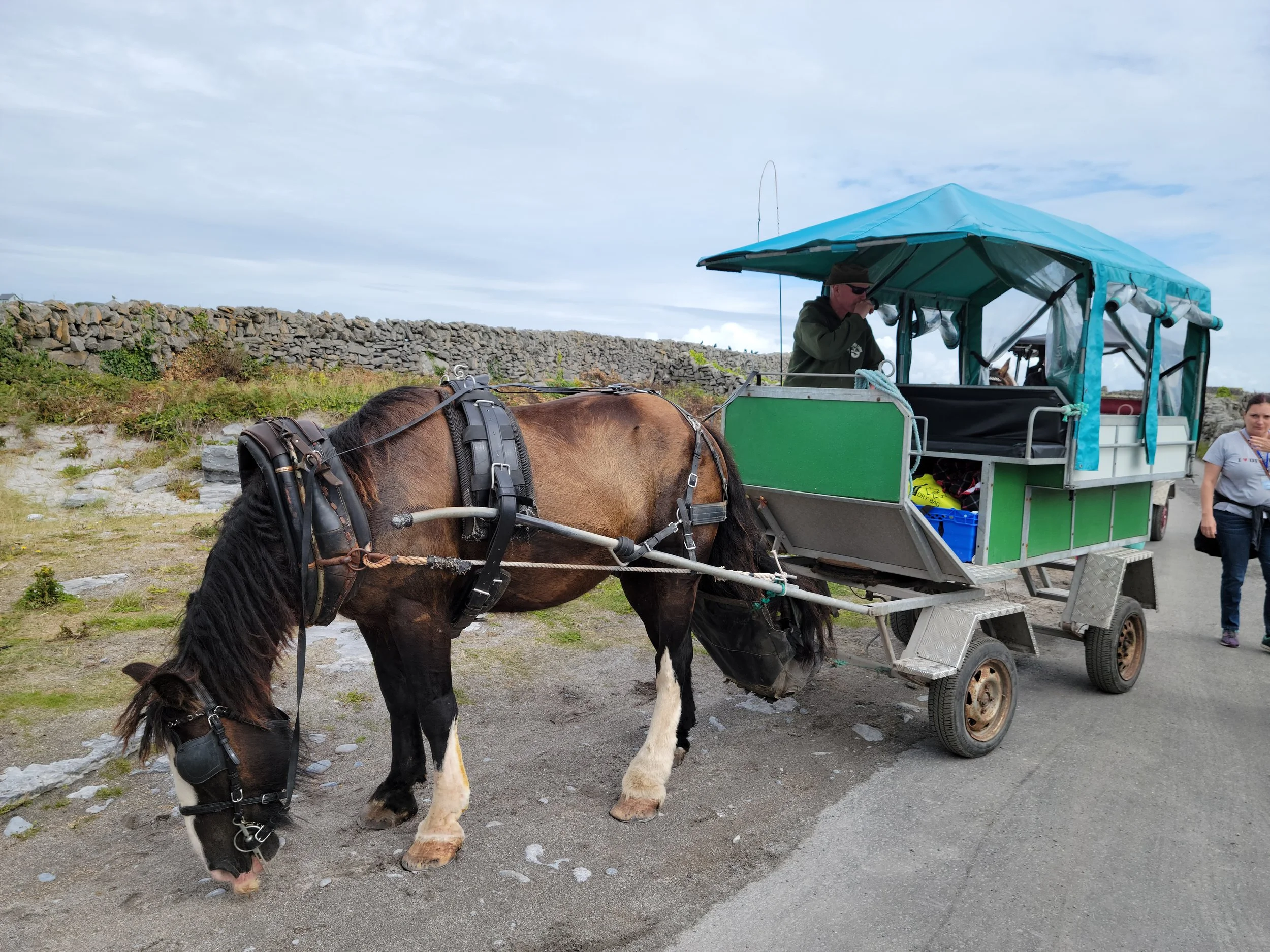
The Aran Islands as a winter setting
The Aran Islands are often presented through bright summer images of stone walls, bicycles and Atlantic views. I wanted the novel to experience them differently: in winter, when weather, darkness and isolation become part of daily life.
The islands contain layers of history. Prehistoric remains, early Christian sites, medieval churches, traditional settlements and modern communities occupy the same narrow landscapes. Stone walls divide the land into thousands of small fields and create patterns visible across entire hillsides.
Winter reduces the number of visitors and changes the scale of the landscape. Ferries become dependent on weather, exposed roads feel more isolated and the Atlantic appears less like scenery than a force governing everything.
From the research to the novel: That atmosphere gave The Atlantis Enigma its sense of confinement, uncertainty and a mystery shaped by the sea.
Underwater archaeology and the problem of evidence
Archaeology beneath the sea presents challenges that do not exist on land. Currents move objects, sediment covers sites, saltwater damages organic materials and visibility may be limited to only a few metres.
A submerged site must also be interpreted carefully. A collection of objects may represent a shipwreck, a harbour, material carried by currents or unrelated finds deposited over centuries.
Modern researchers use sonar, magnetometers, remotely operated vehicles, photogrammetry and diver surveys to identify and record underwater remains. Even with these tools, proving that a structure is artificial can be difficult.
From the research to the novel: The uncertainty of underwater evidence allowed the story to explore how easily discovery, interpretation and ambition can become entangled.
Why stories of lost civilizations endure
Lost civilizations appeal to the belief that history still contains enormous gaps. They suggest that entire cultures, technologies or records could vanish beneath water, desert, forest or later settlement.
Archaeology regularly reveals places that were forgotten, misunderstood or known only through legend. Those genuine discoveries make more extravagant possibilities feel tempting, even when the evidence does not support them.
There is also an emotional element. Atlantis is not merely a lost city. It is a story about achievement, pride, collapse and the fear that even the greatest civilization can vanish.
From the research to the novel: The novel uses that fascination while also asking who would attempt to control a discovery capable of rewriting history.
Book Three
The Donegal Cipher
How Ogham writing worked
Ogham is an early writing system found primarily on stone monuments in Ireland and western Britain. Most surviving inscriptions record personal names and were carved along the edges of standing stones.
The letters are formed from groups of straight strokes placed beside or across a central line. On a standing stone, the edge of the stone often acts as that line. The reader follows the inscription from the lower part of the monument upward.
Ogham has often been presented as a secret Celtic alphabet, but most inscriptions are relatively direct memorial or territorial statements. Its visual form nevertheless lends itself naturally to codes and hidden patterns.
From the research to the novel: The contrast between Ogham's real purpose and its modern reputation helped shape the coded material at the centre of The Donegal Cipher.
Early Irish monasteries as centres of knowledge
Early Irish monasteries were not only religious communities. They became centres of learning, manuscript production, teaching, craftwork and political influence.
Scribes copied religious works, classical texts, legal material, poetry and local traditions. Manuscripts could travel between communities, and scholars moved through networks extending across Ireland, Britain and continental Europe.
Knowledge was valuable, but it was also vulnerable. Manuscripts could be destroyed by fire, warfare, damp, neglect or deliberate concealment. A single surviving copy might preserve material lost everywhere else.
From the research to the novel: The possibility of texts being protected, fragmented and moved between communities became central to the fictional trail followed by George and his companions.
Tory Island and the survival of legend
Tory Island lies off the northwestern coast of Donegal and has long carried a reputation for isolation, resilience and a distinct cultural identity.
The island is associated with stories from Irish mythology, including traditions surrounding Balor of the Evil Eye and the Fomorians. Christian sites, maritime history, fishing traditions and modern island life have added further layers.
Island communities often preserve stories differently from the mainland. A legend may remain attached to a specific cliff, path, stone or family rather than surviving only in written form.
From the research to the novel: Tory Island offered a setting where landscape, oral history and isolation could protect a secret while also making that secret difficult to reach.
Celtic symbols, modern meanings and historical caution
Spirals, knots, circles and interlaced patterns are commonly described as Celtic symbols. Many are genuinely connected to ancient or medieval art, but the precise meanings assigned to them today are often modern interpretations.
A triple spiral may be associated with movement, cycles or sacred significance, but there is rarely a surviving ancient explanation telling us exactly what its makers intended. Interlace patterns can demonstrate extraordinary artistic skill without functioning as a coded language.
This does not make the symbols meaningless. It means their meanings may have changed across centuries and communities.
From the research to the novel: The uncertainty allowed the fictional cipher to draw upon recognizable visual traditions without claiming that every ancient mark had one fixed translation.
The historical connection between Ireland and the Isle of Man
The Isle of Man occupies a strategic position in the Irish Sea, between Ireland, Britain and Scotland. For centuries it was connected to neighbouring coasts through trade, migration, warfare, language and political control.
Irish influence can be seen in early Christianity, personal names, language and material culture. Later Norse settlement created a distinctive mixture reflected in Manx history and institutions.
The sea did not simply divide these places. It connected them. Routes across the Irish Sea could move people, manuscripts, objects and stories more efficiently than many journeys over land.
From the research to the novel: This network made the Isle of Man a natural extension of a mystery beginning in Donegal rather than an unrelated change of setting.
Book Four
The Tofino Deception
Seymour Narrows and the danger of Ripple Rock
Seymour Narrows is a narrow passage near Campbell River where powerful tidal currents are forced between Vancouver Island and the mainland.
For generations, the greatest hazard was Ripple Rock, a submerged twin-peaked formation lying just below the surface. Ships could be pushed toward it by the current, and the rock was blamed for numerous accidents and deaths.
In 1958, the peaks were destroyed through a major controlled explosion placed within tunnels beneath the seabed. The operation reduced the danger, but it did not remove the strength or complexity of the Narrows.
From the research to the novel: The location provided a natural setting for a climax in which technology, current, geography and human ambition become equally dangerous.
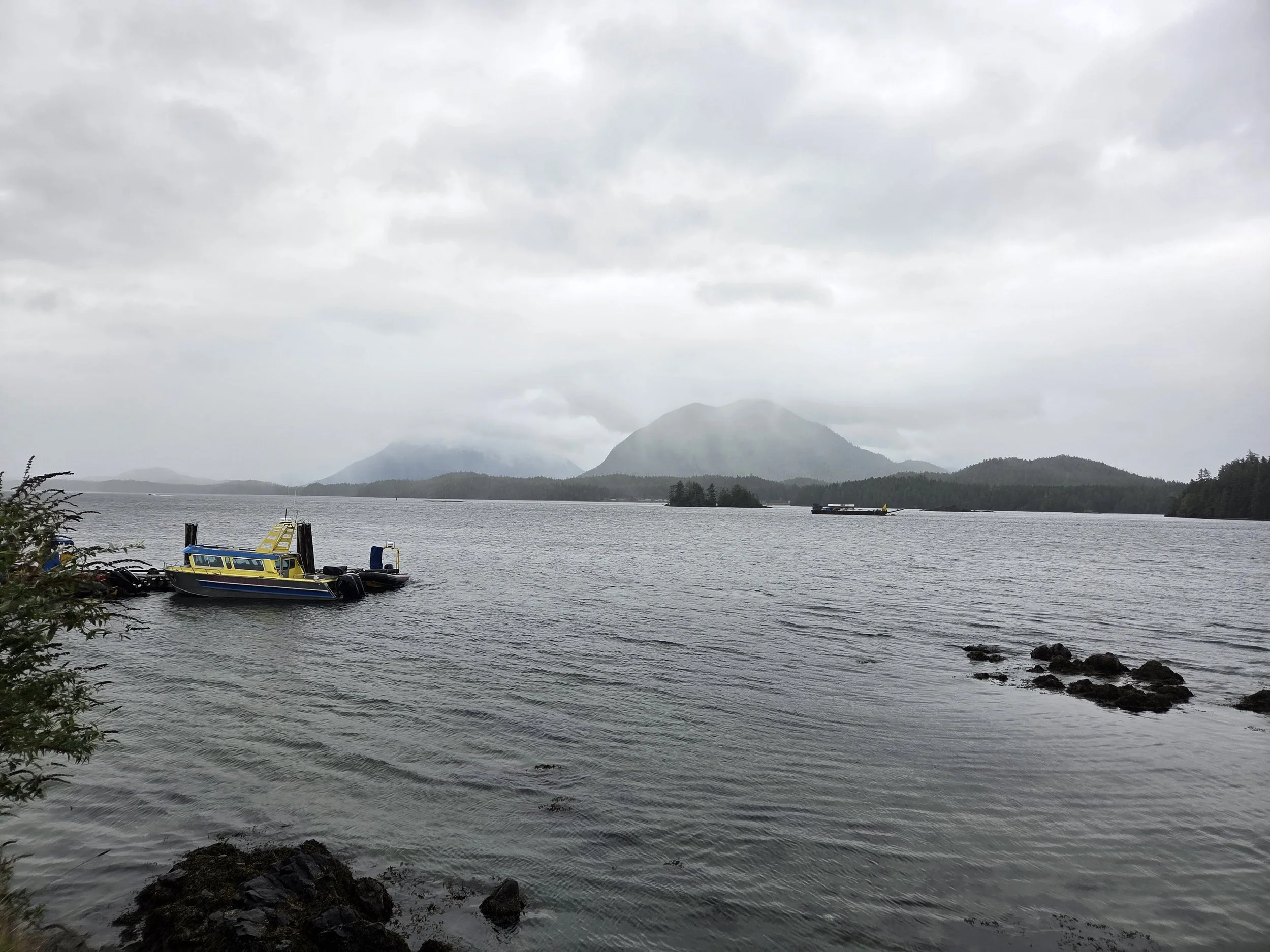
Reading the currents of Vancouver Island
The waters surrounding Vancouver Island are shaped by tide, wind, seabed contours, narrow channels, river outflows and the complicated geography of islands and inlets.
Mariners cannot rely only on what the surface appears to be doing. A calm area may conceal a strong current below, while opposing flows can create standing waves, whirlpools and turbulent seams.
Local experience remains essential even with modern charts, GPS and current tables. Conditions change quickly, and the safest passage may depend on arriving at a narrow window in the tidal cycle.
From the research to the novel: The currents became more than scenery. They shaped travel, restricted movement and created the conditions required for the fictional marine operation.
Marine survey technology beneath the story
Marine surveys use a range of instruments to understand what lies beneath and moves through the water. Sonar maps the seabed, hydrophones record underwater sound, current meters measure water movement and remotely operated vehicles allow researchers to inspect difficult locations.
The same technology can serve very different purposes. It may be used for environmental monitoring, navigation, archaeology, engineering, military research or resource exploration.
That overlap interested me. Equipment presented as harmless scientific monitoring might be capable of gathering far more valuable information than the public is told.
From the research to the novel: Tidecore's fictional operation grew from the possibility that legitimate marine science could be used as cover for a secret commercial objective.
The Pacific coast as a maritime frontier
Vancouver Island's west coast combines long beaches, rainforest, rocky headlands, exposed ocean and communities connected as much by water as by road.
Tofino has become internationally known for surfing and tourism, but the wider region has a much longer history shaped by Indigenous communities, fishing, navigation, logging, trade and survival along an unpredictable coast.
The landscape can feel welcoming and dangerous at the same time. A sheltered beach may sit only a short distance from powerful surf, fog, difficult channels or isolated forest roads.
From the research to the novel: That contrast allowed the story to move between family, friendship and adventure while danger gathered just beyond the familiar landscape.
Researching Indigenous history with respect
Writing about Vancouver Island required recognizing that the coast is not an empty wilderness waiting to be discovered. Indigenous peoples have lived, travelled, fished, traded and maintained relationships with these waters for thousands of years.
Oral traditions, place names, ecological knowledge and cultural practices preserve understandings of the coast that cannot be reduced to archaeological objects or museum displays.
Fiction must be careful not to treat living cultures as decorative mystery or to assign invented universal beliefs to distinct communities.
From the research to the novel: The goal was to acknowledge that George and his companions are visitors who must listen, ask permission and understand that not every story belongs to them.
Book Five · Research in Progress
The Orkney Reliquary
Skara Brae and everyday life five thousand years ago
Skara Brae offers an unusually intimate view of Neolithic life. Rather than monumental tombs or isolated ceremonial stones, the site preserves the interiors of homes.
Stone-built beds, hearths, storage spaces and dressers allow visitors to imagine where people slept, prepared food, worked and gathered. The houses were connected and partly buried within material that helped protect them from the weather.
What makes the site remarkable is not only its age but its familiarity. The rooms are ancient, yet their organization still feels recognizably domestic.
From the research to the novel: Skara Brae reinforced the idea that the people behind Orkney's monuments were not mysterious abstractions. They were families, craftspeople and communities making practical choices within a demanding landscape.
Maeshowe and the return of the winter sun
Maeshowe is a chambered tomb constructed with exceptional precision. Its entrance passage is aligned so that light from the setting sun around the winter solstice reaches into the interior chamber.
The alignment demonstrates careful observation of the sky and an ability to incorporate seasonal events into architecture. In a northern landscape where winter brings long darkness, the return of light would have carried both practical and symbolic importance.
Centuries later, Norse visitors entered the chamber and carved runic inscriptions into its stones, adding another historical layer to the monument.
From the research to the novel: Maeshowe illustrates one of the themes shaping the book: places can accumulate meanings as different cultures enter, use and reinterpret them.
The Ring of Brodgar and Orkney's ceremonial landscape
The Ring of Brodgar stands within a landscape crowded with Neolithic monuments. Nearby are the Stones of Stenness, Maeshowe, settlement remains and other archaeological sites.
The ring was never an isolated construction. Its meaning was likely connected to routes through the landscape, gatherings, seasonal events and relationships between monuments, water and surrounding hills.
Only part of the original stone circle remains standing, but the scale of the earthwork and the position of the stones still convey a powerful sense of intention.
From the research to the novel: The wider ceremonial landscape encouraged me to think not about one mysterious object, but about a system in which separate places could work together.
Viking Orkney and the meeting of two worlds
Orkney's Viking history began thousands of years after the construction of its Neolithic monuments. Norse settlers entered a landscape already filled with ancient structures whose original purposes had been partly or entirely forgotten.
The islands became an important Norse centre connected to Scotland, Ireland, Scandinavia and Atlantic sea routes. Norse political power, Christianity, trade and storytelling all left lasting marks on Orcadian identity.
The Viking relationship with older monuments is especially interesting. Ancient chambers could be entered, reused, feared, looted or incorporated into new stories.
From the research to the novel: This meeting of Neolithic architecture and Viking ambition helped shape the reliquary's imagined history and the idea that later people might recognize a purpose within something they did not create.
What were chambered cairns designed to do?
Chambered cairns are generally understood as places associated with the dead, but describing them only as tombs may oversimplify their role.
Their passages, chambers, architecture and positions within the landscape suggest that they may also have supported gatherings, rituals, memory, territorial identity and relationships between the living and the dead.
Sound, darkness, restricted movement and controlled light would all have shaped the experience of entering one. The architecture did more than contain remains. It directed the body and senses.
From the research to the novel: This became one of the central creative questions behind The Orkney Reliquary: what if a chamber was designed not simply to hold something, but to interact with it?
From the Field
Research beyond the desk
The landscapes behind the stories, photographed during research trips to the places that became part of the novels.
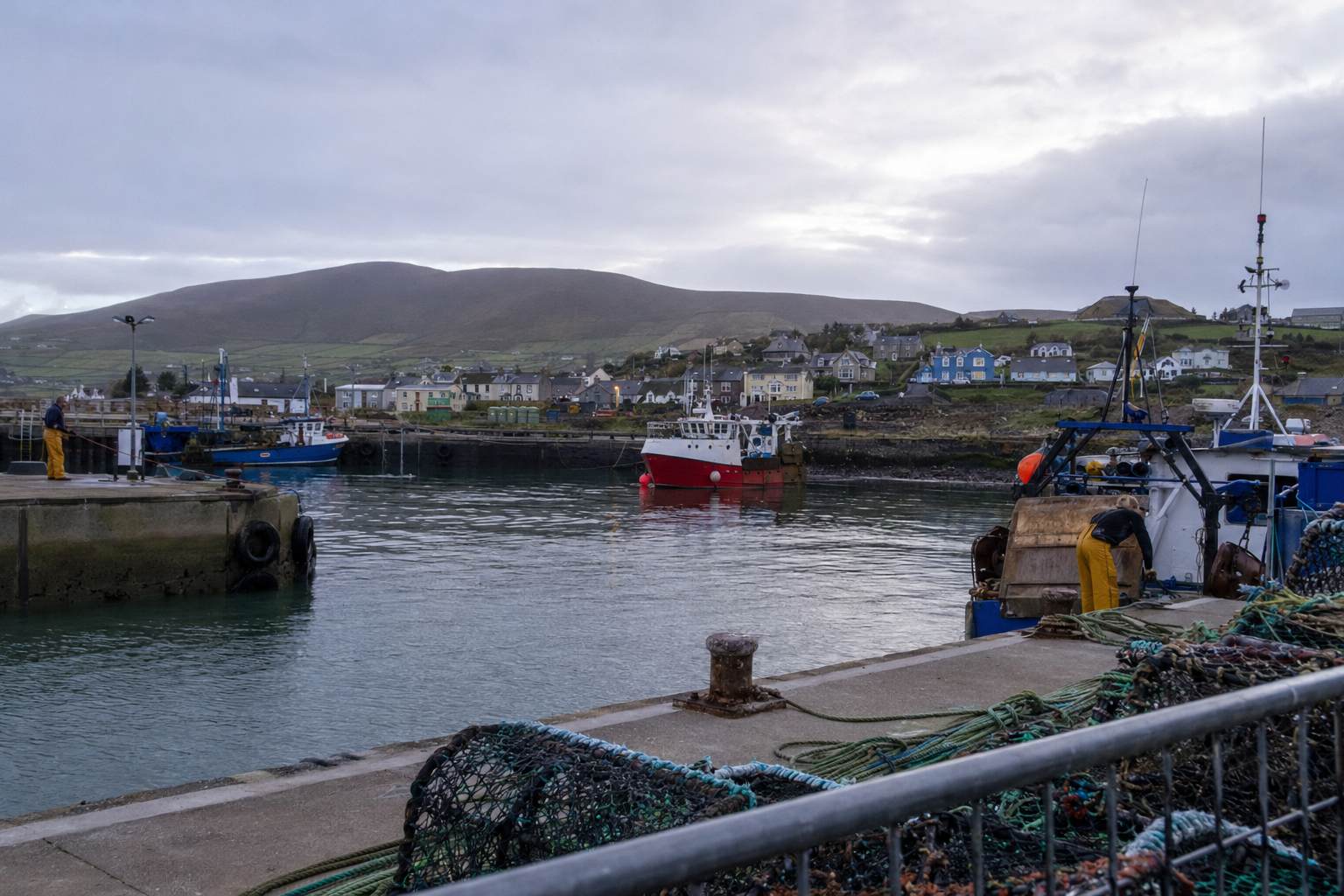
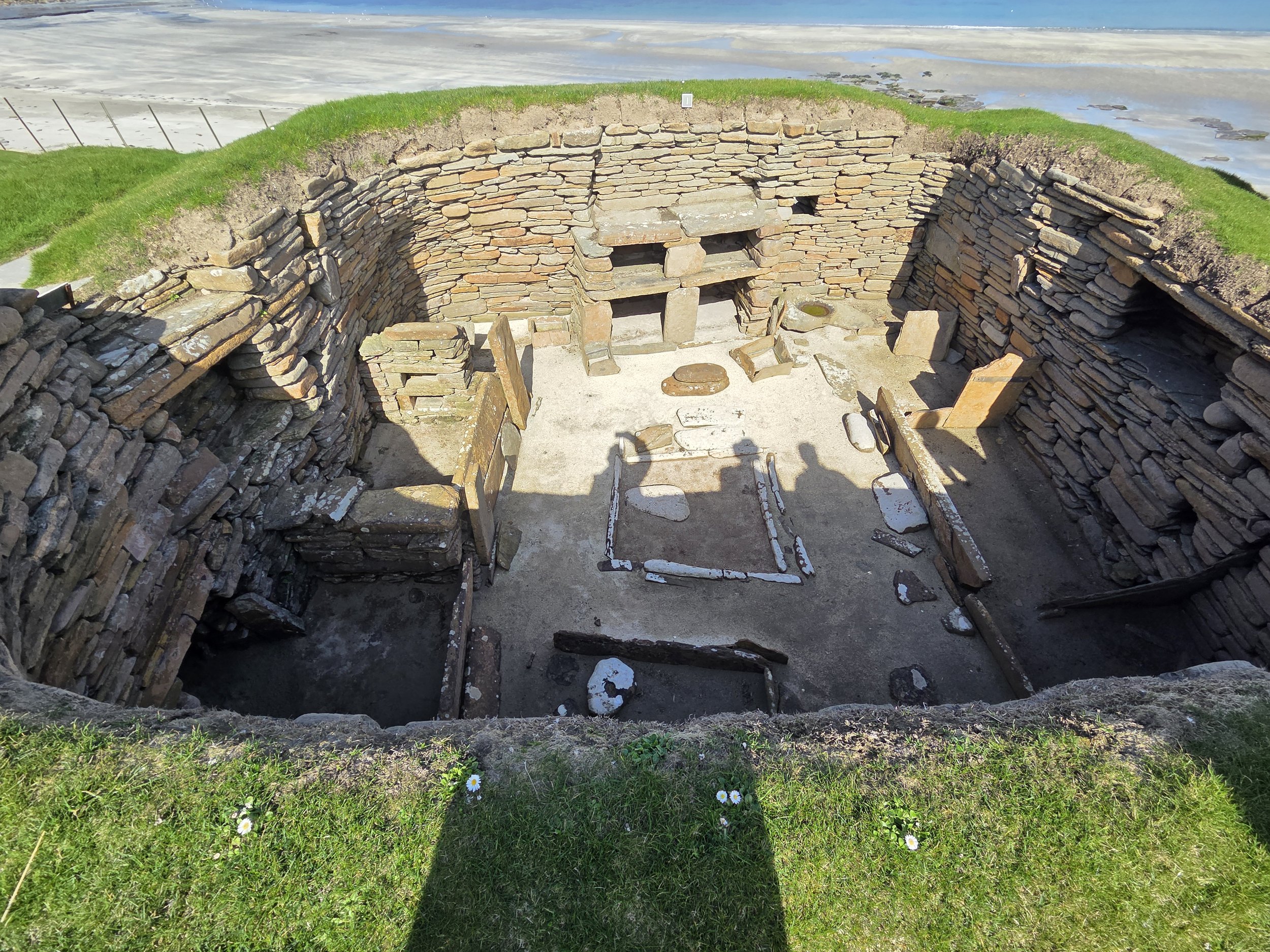
“Research isn't just reading books. Sometimes it is standing on a cliff in a storm, walking through a five-thousand-year-old tomb, or listening to the people who know a place best.”
Current Investigation
The Orkney Reliquary
What were Neolithic people really doing beneath the hills of Orkney?
Research continues into chambered cairns, Viking settlement, ancient sea routes, stone construction and the stories that remain embedded in the Orcadian landscape.
Join the Expedition
Receive new research notes, archaeological discoveries, photography and updates from future George Ryan adventures.
Join the Expedition