FROM THE ARCHIVES

THE BRANDON HOUSE
ANCIENT SITES

THE DINGLE PENINSULA
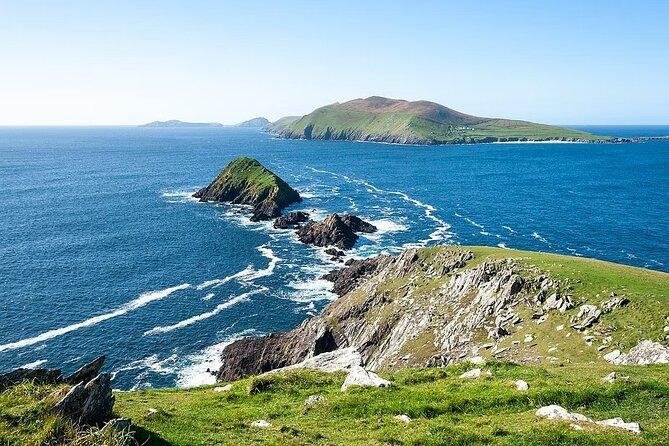
The Dingle Peninsula is a landscape shaped by the Atlantic, where rugged mountains, ancient stone monuments and a vibrant coastal culture exist side by side. Its windswept headlands, secluded beaches and deep connection to Irish history made it the natural setting for The Brandon House. More than a backdrop, Dingle becomes part of the story itself, inspiring George Ryan’s new beginning and the mystery that draws him far beyond Ireland’s western shore.
-
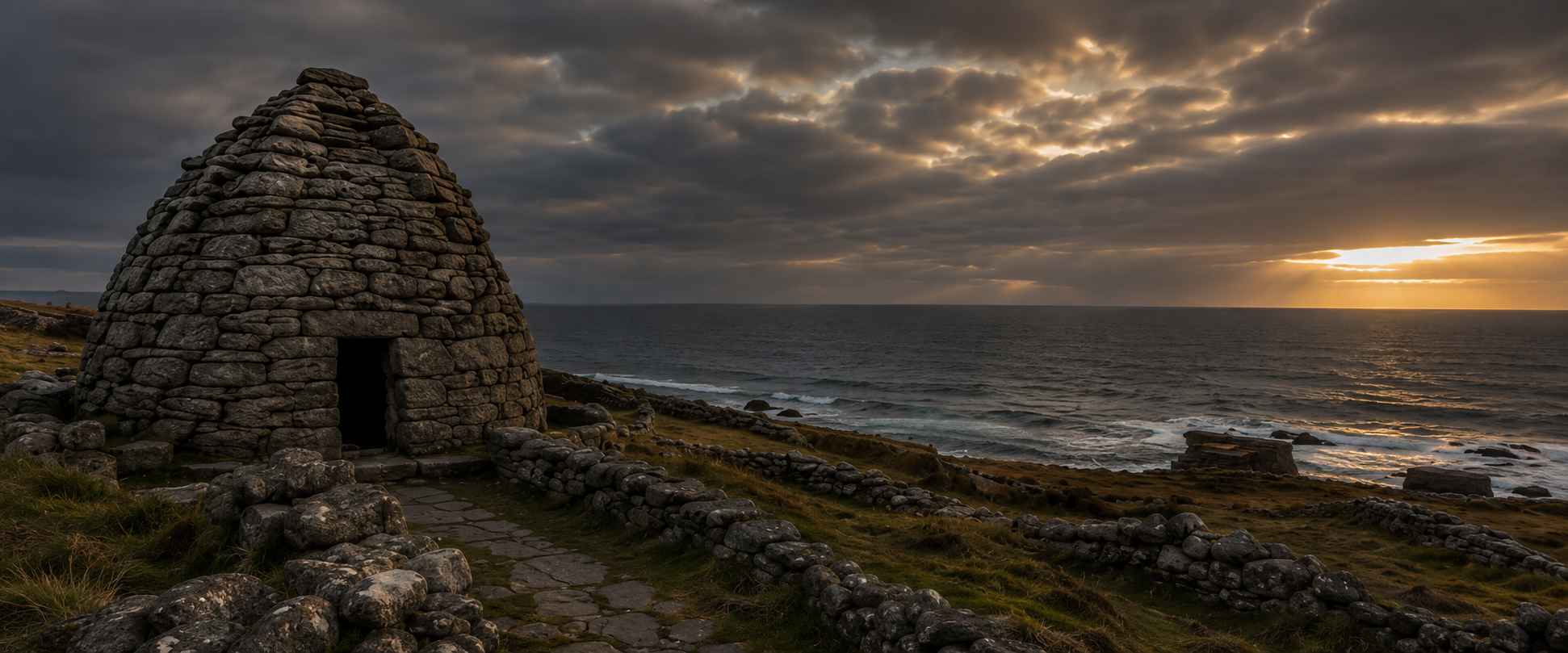
The Dingle Peninsula is more than the dramatic setting of The Brandon House. It is an archaeological landscape shaped by thousands of years of human settlement. Prehistoric standing stones, ringforts, ogham inscriptions and early Christian monuments are scattered throughout its mountains and coastal farmland. Sites such as Gallarus Oratory, the Fahan beehive huts and Dunbeg Fort reveal generations of people who built communities at Ireland’s western edge, leaving their stories preserved in stone.
This deep sense of history made the peninsula the natural starting point for George Ryan’s first adventure. In The Brandon House, the discovery beneath an old farmhouse draws upon the real archaeological richness of the region and its long association with faith, travel and St Brendan the Navigator. The mystery itself is fictional, but the ancient landscape surrounding it is very real, creating a place where the boundary between recorded history and legend can feel remarkably thin.
-
In The Brandon House, George Ryan comes to the Dingle Peninsula intending to transform an old farmhouse into a bed and breakfast for the surfers, hikers and travellers drawn to Ireland’s Atlantic coast. His plans change dramatically when renovation work uncovers a sealed burial beneath the property. Inside are the remains of an ancient mariner, along with a manuscript, jewellery and other objects that appear to connect early medieval Ireland with a civilization far beyond Europe.
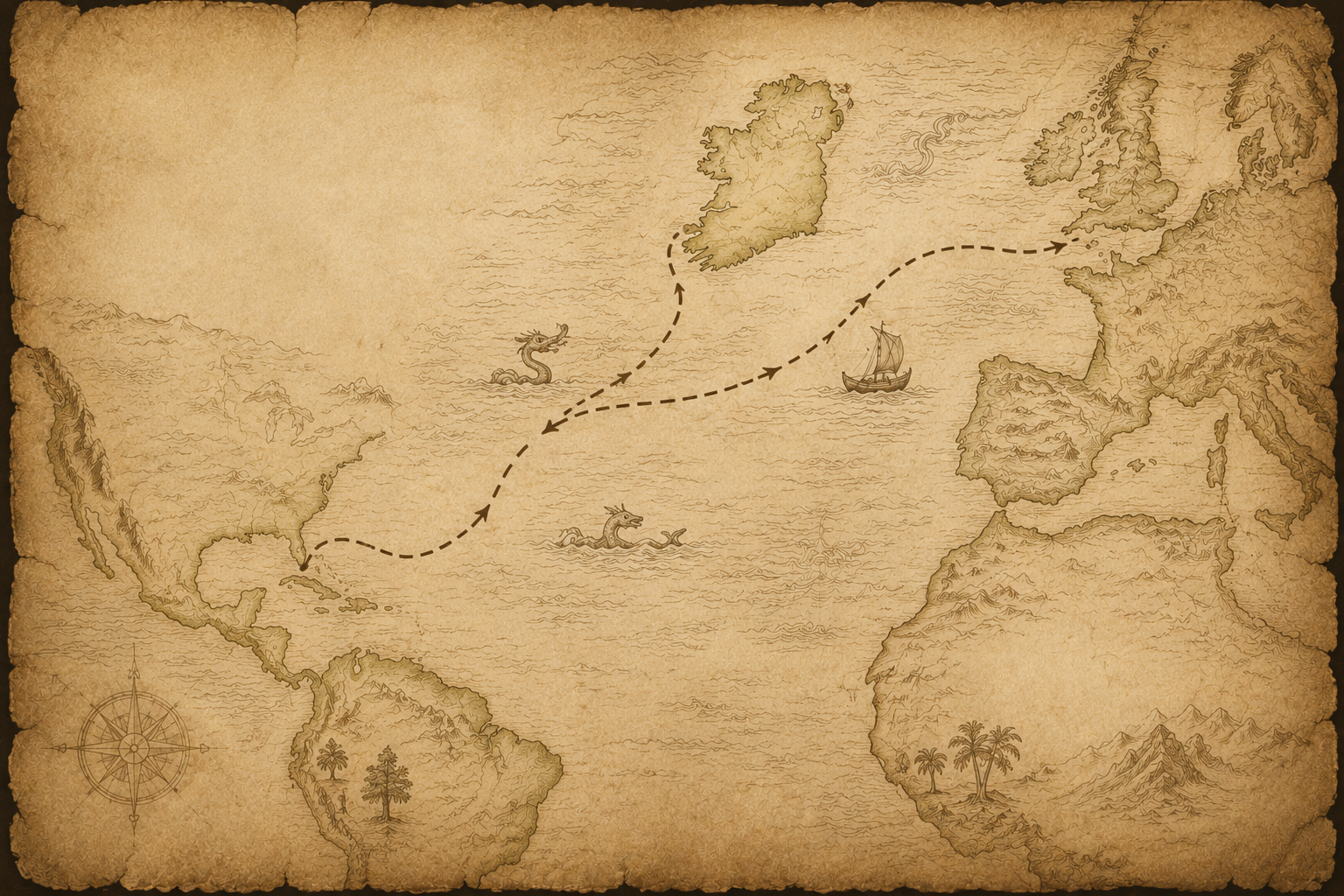
The discovery draws George, Áine and archaeologist Jasminder “Jazz” Grewal into an investigation involving St Brendan the Navigator, early Atlantic voyages and the Moche civilization of Peru. The Dingle Peninsula is both the starting point of the mystery and the historical foundation beneath it. Its real landscape of early Christian monuments, ancient stones and seafaring traditions makes the fictional discovery at the Brandon House feel as though it could have been hidden there for centuries.
THE MOCHE VALLEY
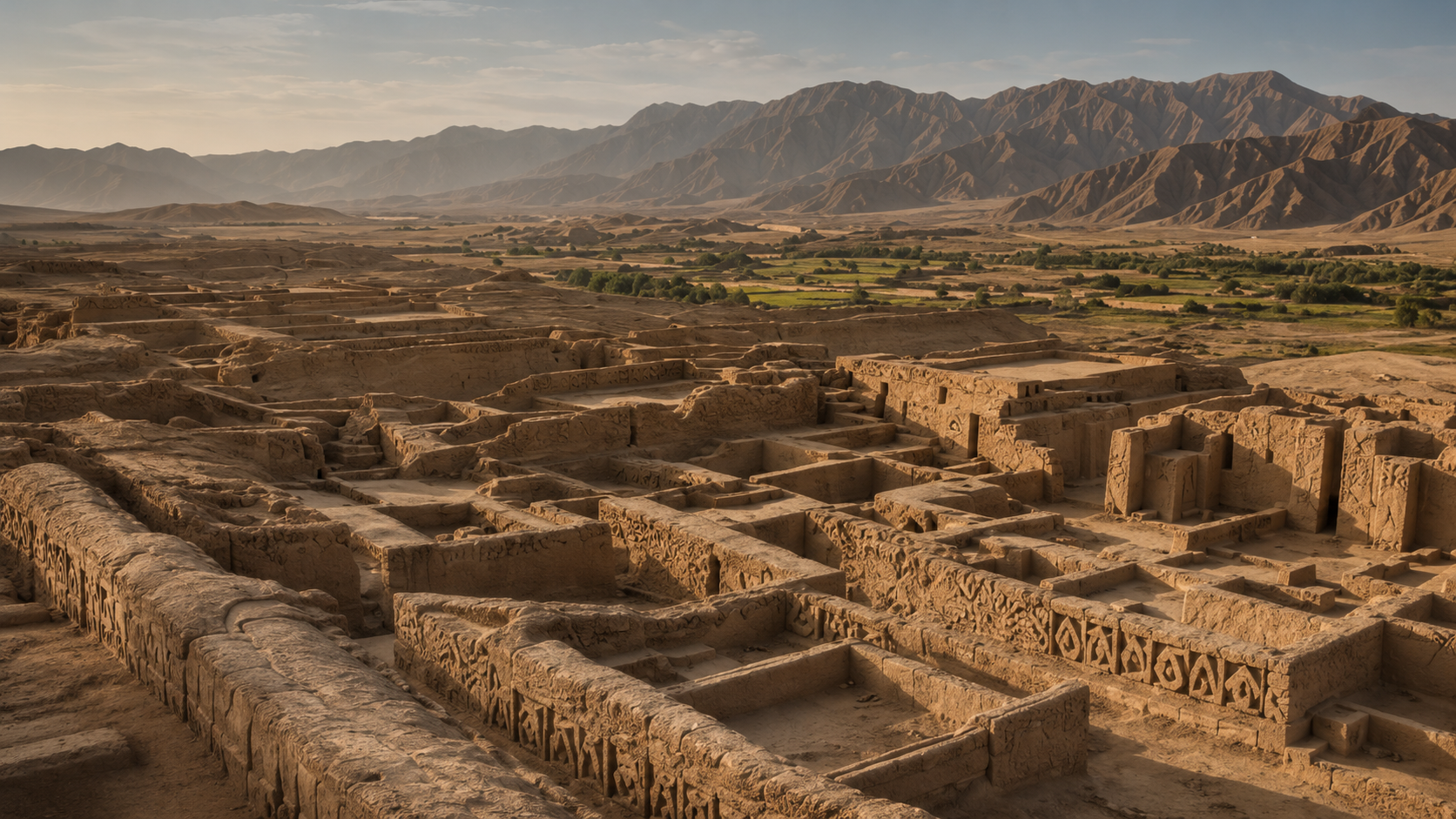
The Moche Valley, stretching inland from Peru’s northern coast, was once the heartland of the remarkable Moche civilization. Its desert landscape contains monumental adobe pyramids, elaborate burials and vivid artwork that reveal a society rich in ritual, engineering and mythology. In The Brandon House, the valley provides an important historical connection between the ancient cultures of Peru and the mystery surrounding the mariner discovered in Ireland.
-
The Moche Valley lies along Peru’s northern coast, where the Moche River flows from the Andes across an otherwise arid landscape toward the Pacific. Long before the rise of the Inca Empire, communities transformed this desert valley through extensive irrigation canals, creating fertile agricultural land capable of supporting large settlements. Between approximately the first and eighth centuries AD, the valley became one of the principal centres of the Moche civilization.
At the foot of Cerro Blanco, the Moche constructed an important urban and ceremonial centre dominated by two enormous adobe monuments: the Huaca del Sol and the Huaca de la Luna. The Huaca del Sol appears to have served political and administrative purposes, while the Huaca de la Luna was a major ceremonial complex. Its surviving walls contain colourful murals depicting deities, animals and scenes from Moche mythology. Houses, workshops, streets and public spaces once occupied the ground between the two structures, revealing that this was not simply a religious site but the centre of a thriving community.
The Moche left no written history, so much of what is known about them comes from archaeology. Their remarkably detailed ceramics, metalwork, murals and tombs provide evidence of a sophisticated society with skilled artisans, powerful leaders and complex religious traditions. After Moche power declined, the valley remained important to later cultures, including the Chimú and eventually the Inca. Today, its surviving monuments offer one of the clearest windows into the civilizations that flourished on Peru’s northern coast centuries before the arrival of Europeans.
-
In The Brandon House, the Moche Valley becomes part of George Ryan’s search for the truth behind the ancient mariner discovered in Ireland. Evidence surrounding the burial suggests that the mystery may extend far beyond the Dingle Peninsula, leading George and his companions across the Atlantic and into the ancient landscapes of Peru. The valley’s archaeological remains offer tantalizing clues about possible contact between cultures separated by an ocean and by centuries of accepted history.
Among the Moche monuments, artwork and surviving traditions, the group begins to recognize connections that should not exist. Familiar symbols and fragments of ancient legend suggest that the mariner’s story may be tied to the peoples of pre-Columbian Peru. In the novel, the Moche Valley becomes a place where established history collides with an unsettling possibility: that the ancient world may have been far more connected than anyone imagined.
MACHU PICCHU
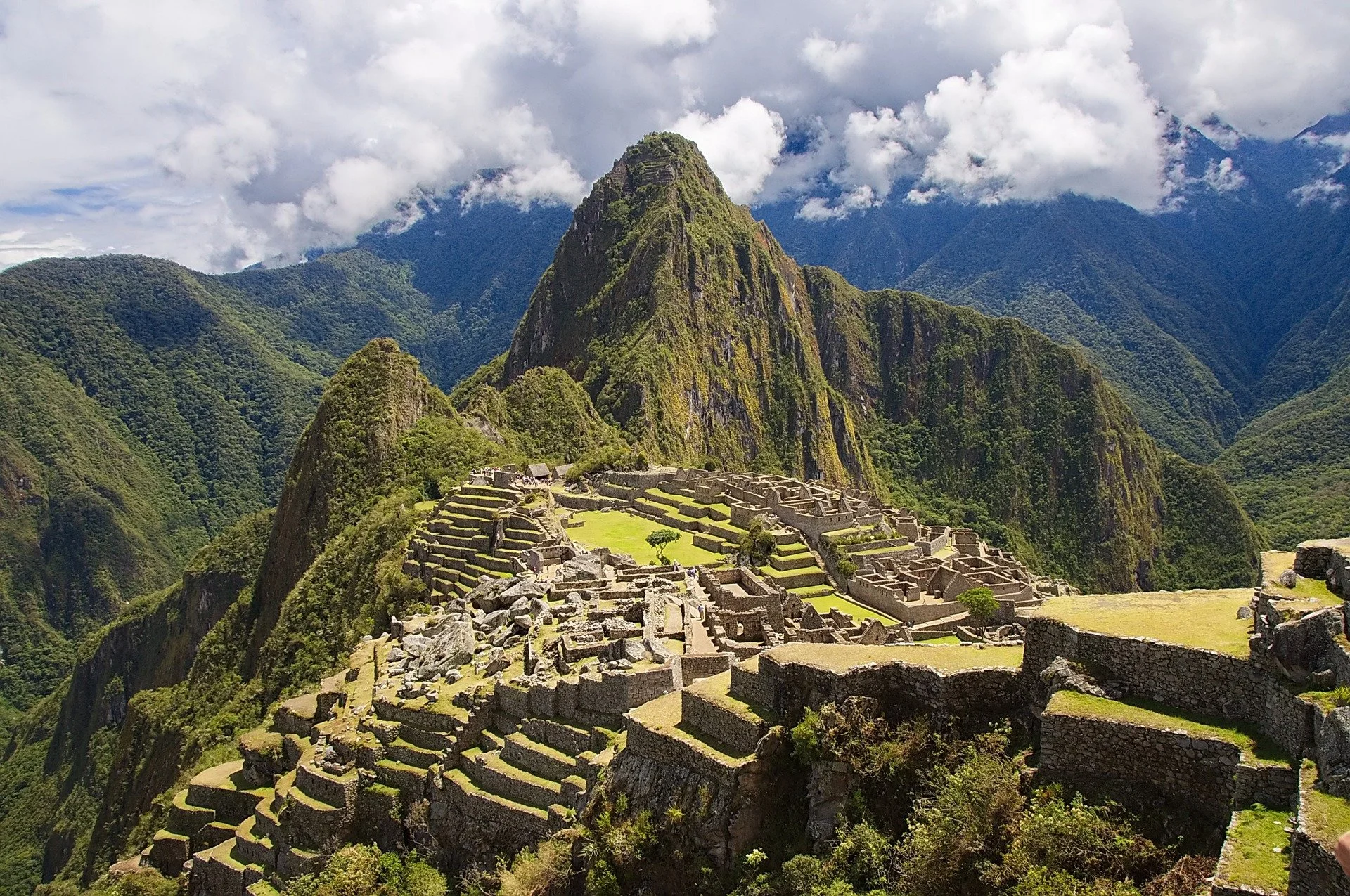
Machu Picchu rises high in the Peruvian Andes, where carefully constructed stone terraces, temples and residences overlook the Urubamba Valley. Built by the Inca during the fifteenth century, the mountain citadel remains one of the world’s most remarkable archaeological sites. Its dramatic setting, extraordinary craftsmanship and still-unanswered questions make it an enduring symbol of the sophistication and mystery of the Inca civilization.
-
Machu Picchu was constructed during the height of the Inca Empire in the fifteenth century, most likely during the reign of the emperor Pachacuti. Built along a high mountain ridge approximately 2,430 metres above sea level, the settlement contained around 200 buildings, including residences, temples, ceremonial spaces and agricultural terraces. Although its precise purpose remains uncertain, many archaeologists believe it served as a royal estate and sacred retreat connected to the Inca emperor.
The site demonstrates the extraordinary skill of Inca architects and engineers. Its buildings were constructed from carefully shaped stones fitted together without mortar, while terraces stabilized the steep slopes and provided space for cultivation. An advanced network of channels and fountains carried fresh water through the settlement, and carefully planned drainage protected it from the region’s heavy rainfall. Several structures, including the Temple of the Sun and the Intihuatana stone, also suggest that religious ceremonies and astronomical observation played an important role there.
Machu Picchu was abandoned during the sixteenth century as the Inca Empire collapsed following the Spanish conquest. The Spanish do not appear to have discovered or destroyed the mountaintop settlement, allowing much of its architecture to survive. Although local people continued to know about the ruins, the site received international attention after American scholar Hiram Bingham arrived there in 1911 with the assistance of local residents.
Archaeological research has continued to reveal more about Machu Picchu, but many questions surrounding its inhabitants and original function remain unanswered. In 1983, UNESCO designated the Historic Sanctuary of Machu Picchu a World Heritage Site, recognizing it as an exceptional achievement of Inca architecture, engineering and land use. Today, it remains the most internationally recognized symbol of the Inca civilization and one of the world’s most important archaeological sites.
-
In The Brandon House, Machu Picchu enters the story during a campfire conversation between George and Jazz. As they discuss the mysteries surrounding the ancient mariner found in Ireland, Jazz points to the Inca citadel as an example of how easily the true purpose of an ancient place can become obscured when its builders leave no written explanation behind. Archaeology can reveal how a site was constructed and how its people lived, but interpretation must often fill the gaps.
The conversation reinforces one of the novel’s central questions: how much of accepted history is certain, and how much is simply the most convincing explanation supported by the evidence currently available? Machu Picchu does not provide the answer to George’s mystery, but it illustrates the uncertainty surrounding the ancient world and leaves room for discoveries capable of challenging what we think we know.
THE NAZCA LINES
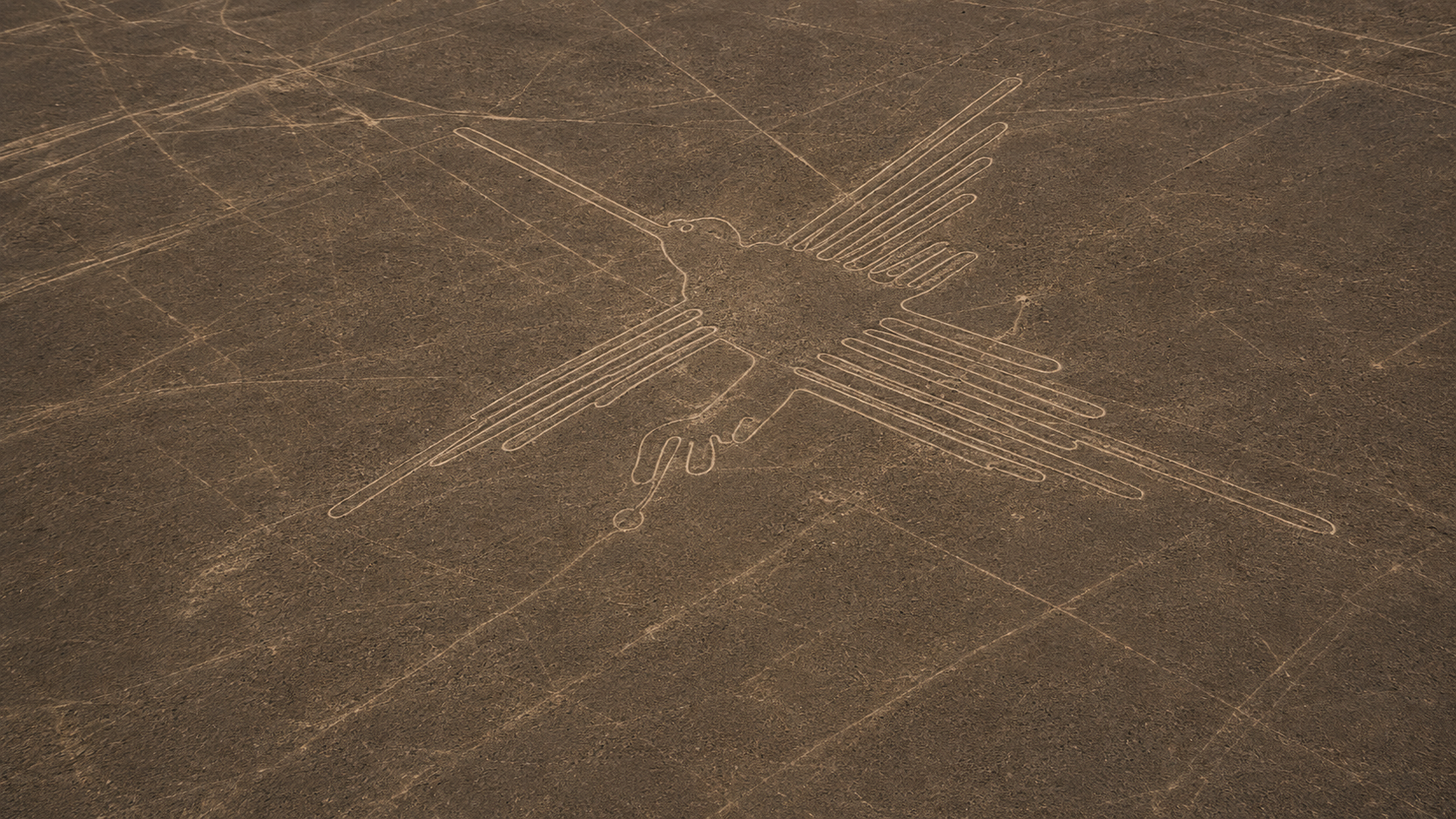
The Nazca Lines stretch across the arid plains of southern Peru, where enormous figures of animals, plants and geometric shapes were carefully etched into the desert surface more than a thousand years ago. Best appreciated from above, these mysterious geoglyphs include images of a hummingbird, spider, monkey and condor. Their extraordinary scale, precision and still-debated purpose have made the Nazca Lines one of South America’s most intriguing archaeological landscapes.
-
The Nazca Lines were created on the desert plains of southern Peru between approximately 500 BC and AD 500. Most are associated with the Paracas and Nazca cultures, which flourished in the region long before the rise of the Inca Empire. Spread across roughly 450 square kilometres, the geoglyphs include straight lines, enormous geometric patterns and representations of animals, plants and human-like figures.
The designs were made by removing the desert’s dark, reddish surface stones to expose the lighter soil beneath. Despite their immense size, this required no advanced machinery. The creators could establish the designs using wooden stakes, ropes and carefully measured lines. The region’s extremely dry climate, limited rainfall and relative lack of wind helped preserve the shallow markings for centuries.
Their original purpose remains uncertain. Archaeologists have proposed that some lines formed ceremonial pathways connected with religious gatherings, while others may have related to water, fertility or the worship of deities associated with the surrounding mountains. Earlier researchers also suggested astronomical alignments, although the evidence indicates that the lines probably served several purposes rather than functioning as a single enormous calendar.
The geoglyphs became widely known during the twentieth century as aircraft began flying over the region. Peruvian archaeologist Toribio Mejía Xesspe studied them during the 1920s and 1930s, followed by researchers Paul Kosok and Maria Reiche, who devoted decades to documenting and protecting them. In 1994, UNESCO designated the Lines and Geoglyphs of Nazca and Palpa a World Heritage Site, recognizing them as an extraordinary achievement of ancient planning, artistry and land use.
-
In The Brandon House, the Nazca Lines arise as George and Jazz explore the possibility that ancient cultures may have travelled farther and exchanged more knowledge than conventional history acknowledges. The enormous designs, created to be fully appreciated only from high above the desert, represent the kind of archaeological mystery that challenges simple explanations and leaves important questions unanswered.
Their presence in the novel strengthens the connection between Peru’s ancient civilizations and the mariner discovered beneath the Brandon House in Ireland. The lines do not offer direct proof of contact across the Atlantic, but their scale, precision and uncertain purpose remind George that the surviving evidence of the ancient world is often incomplete. Like the mariner himself, they suggest that history may contain journeys, beliefs and connections that have yet to be fully understood.
REAL PLACES. ANCIENT QUESTIONS
THE BEGINNING OF THE ADVENTURE