EXPLORE BEHIND
THE ADVENTURE

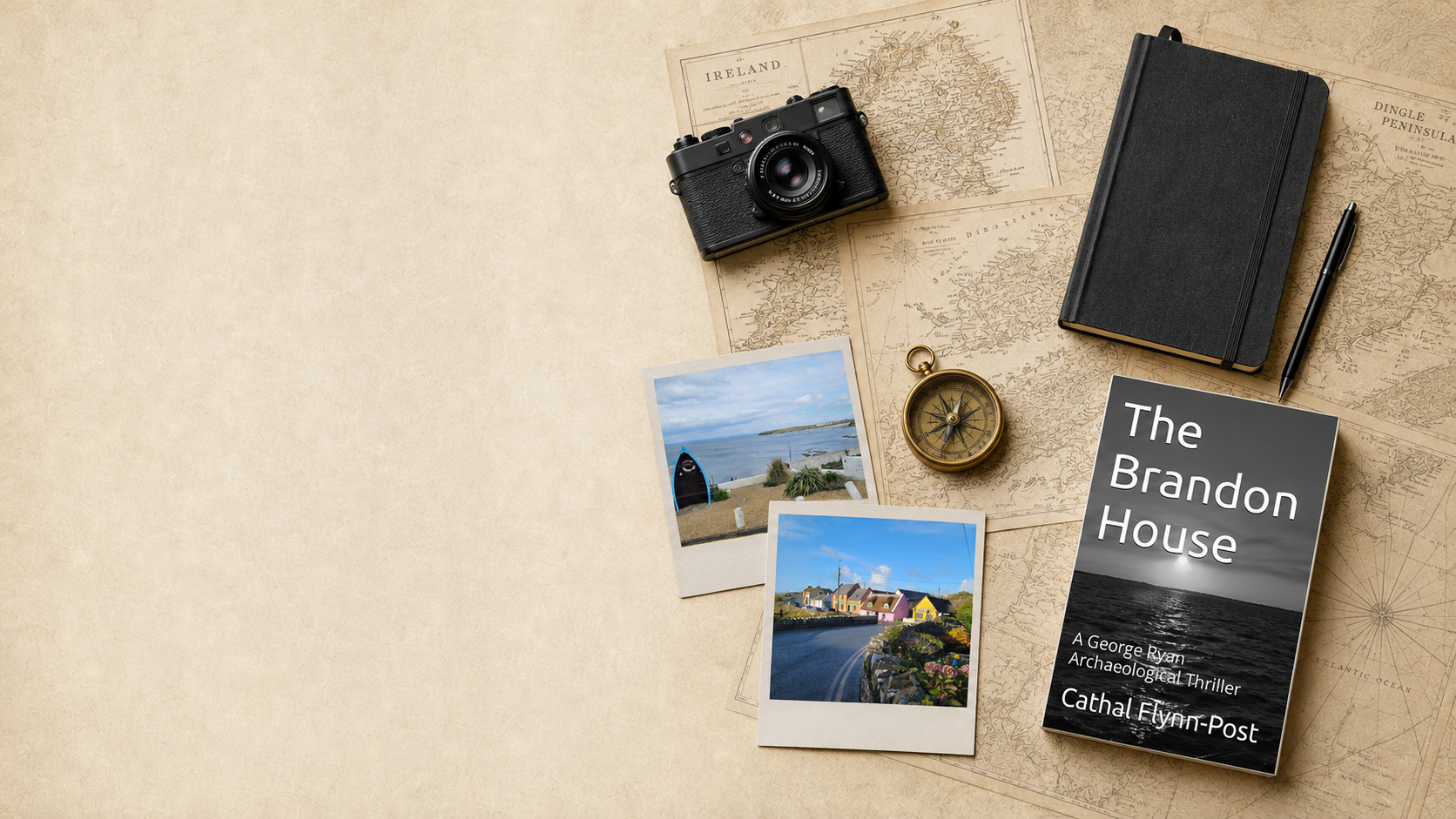
THE BRANDON HOUSE
REAL PLACES ❖ ANCIENT STORIES ❖ THE RESEARCH BEHIND THE NOVEL
WHERE THE JOURNEY BEGAN
The Brandon House began with a dream of opening a bed and breakfast for the outdoor adventurers drawn to Ireland, including those who come to experience the vibrant surf culture of the Dingle Peninsula.
With the discovery of an ancient mariner entombed beneath the property, that dream becomes something far greater. What begins as curiosity about the past soon awakens the unsettling possibility that some stories are written into the land itself.
From the windswept west coast of Ireland to the ancient high places of Peru, the novel is shaped by real landscapes, forgotten legends, and the people who keep those stories alive.
This is the research, exploration, and sense of wonder that became the heart of the book.
DINGLE ❖ WHERE THE LAND MEETS THE OCEAN
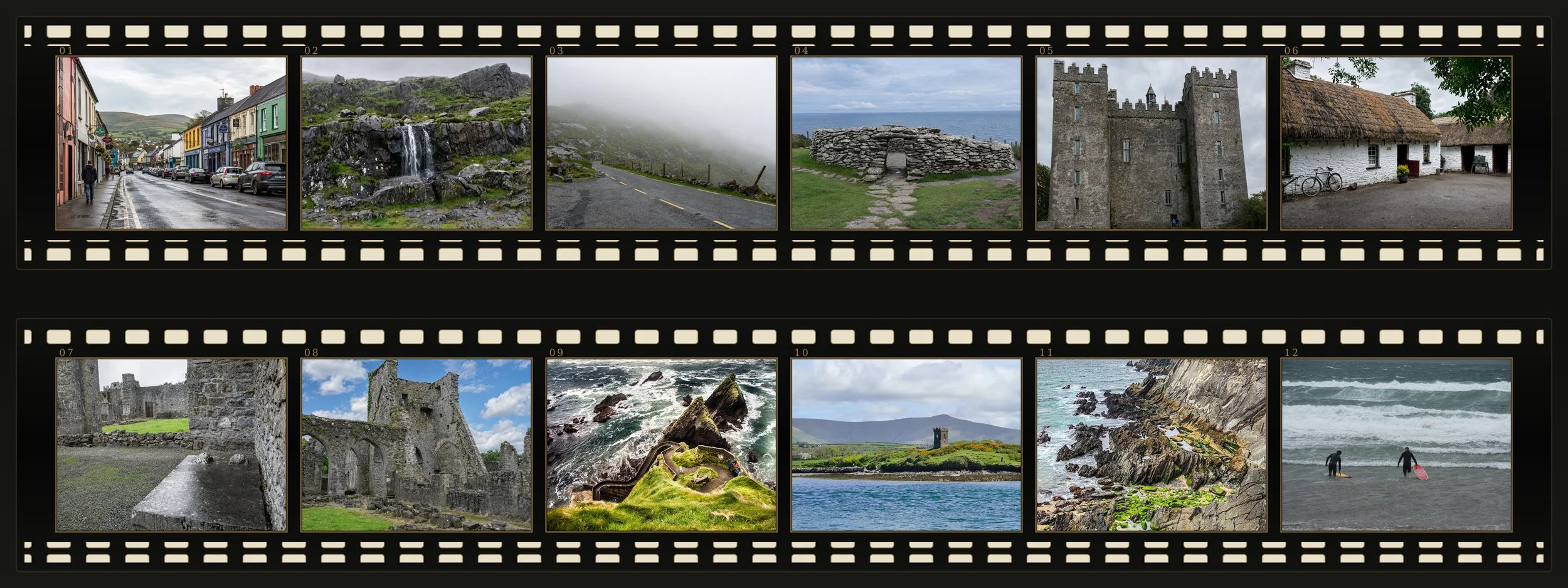
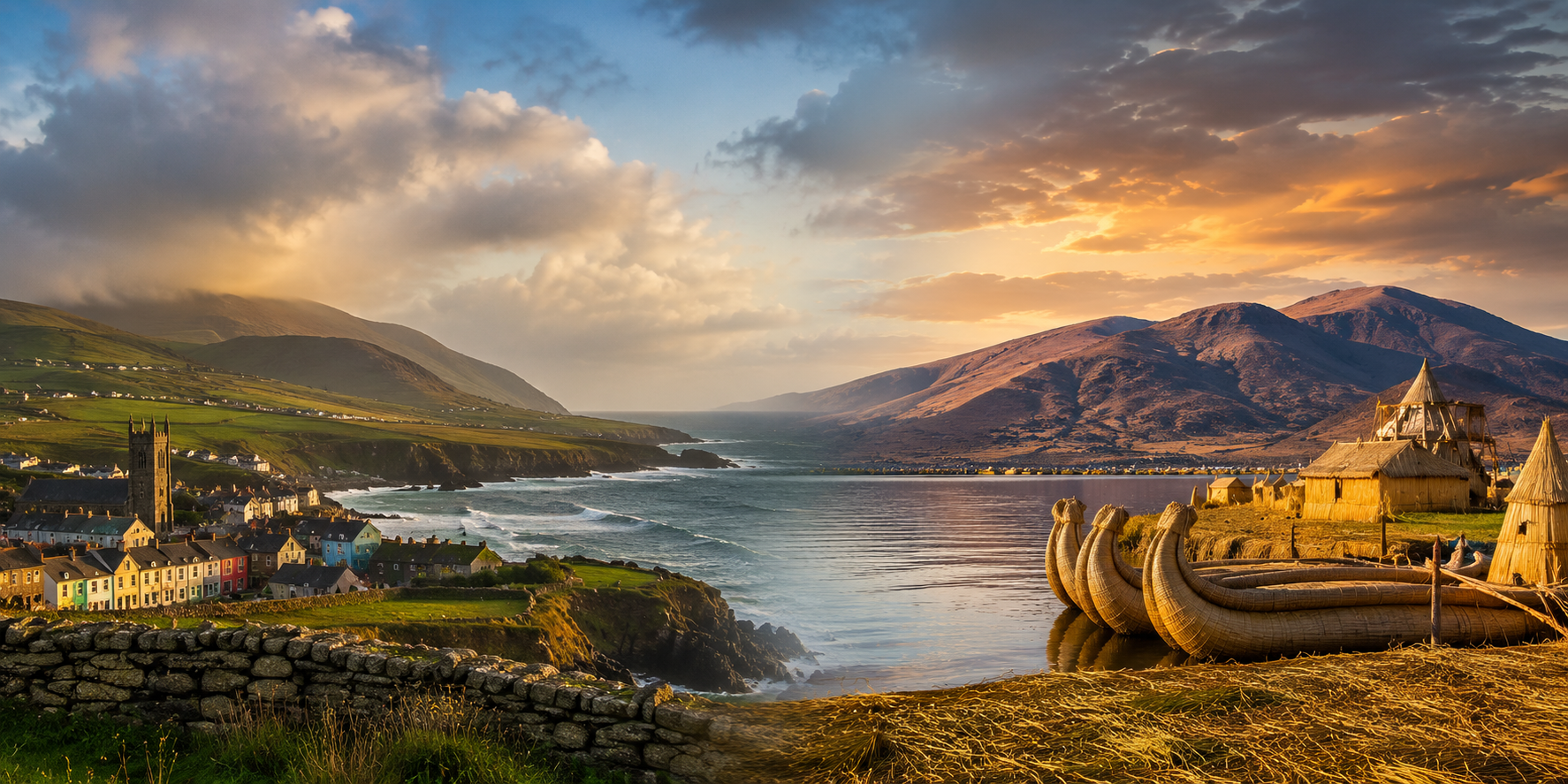
Few places blend history, legend, and rugged beauty quite like the Dingle Peninsula. For over a thousand years, its sheltered harbour has been home to fishermen, explorers, and pilgrims who looked west toward the unknown Atlantic.
Local tradition tells of St. Brendan the Navigator, the sixth-century monk believed to have sailed from these shores in search of the Promised Land of the Saints. Whether history or legend, his remarkable voyage has become woven into the identity of the peninsula, inspiring generations of adventurers and storytellers alike.
Ancient beehive huts, early Christian churches, standing stones, ogham stones, ring forts, and medieval ruins are scattered throughout the landscape. Around almost every bend lies another reminder that the Dingle Peninsula has been continuously inhabited for thousands of years.
Today, Dingle is one of Ireland's most celebrated travel destinations. Visitors come to hike the dramatic slopes of Mount Brandon, drive the breathtaking Slea Head route, watch fishing boats return to the harbour, paddle hidden coves, surf the Atlantic swells, and experience traditional Irish music in the town's welcoming pubs. It is a place where adventure and history exist side by side.
That spirit became the inspiration for The Brandon House. George Ryan's dream of transforming an old farmhouse into an adventure lodge for hikers, surfers, cyclists, and travellers seeking an authentic Irish experience mirrors the very tourism that draws thousands of visitors to the peninsula each year. His vision reflects the growing appeal of experiential travel, where visitors don't simply see Ireland; they immerse themselves in its landscapes, culture, and stories.
But beneath that peaceful dream lies another Ireland. During the farmhouse renovation, the discovery of a hidden crypt beneath the old house transforms a simple restoration project into an archaeological mystery spanning continents. The same hills, coastlines, and fishing villages that welcome visitors today become the backdrop for a race to uncover secrets that have remained hidden for centuries.
THE VOYAGE OF ST. BRENDAN
THE NAVIGATOR ❖ THE LEGEND ❖ THE POSSIBILITY
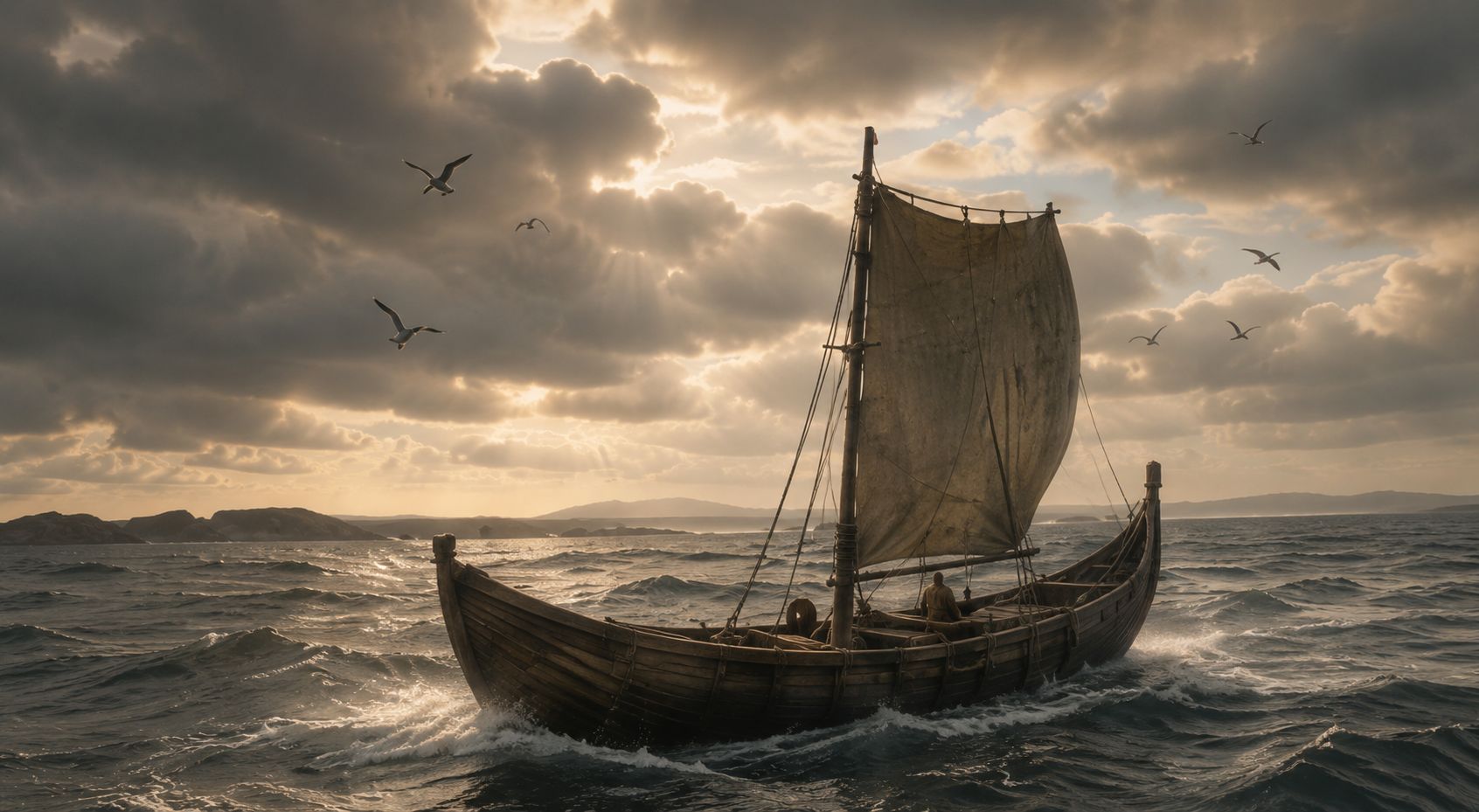
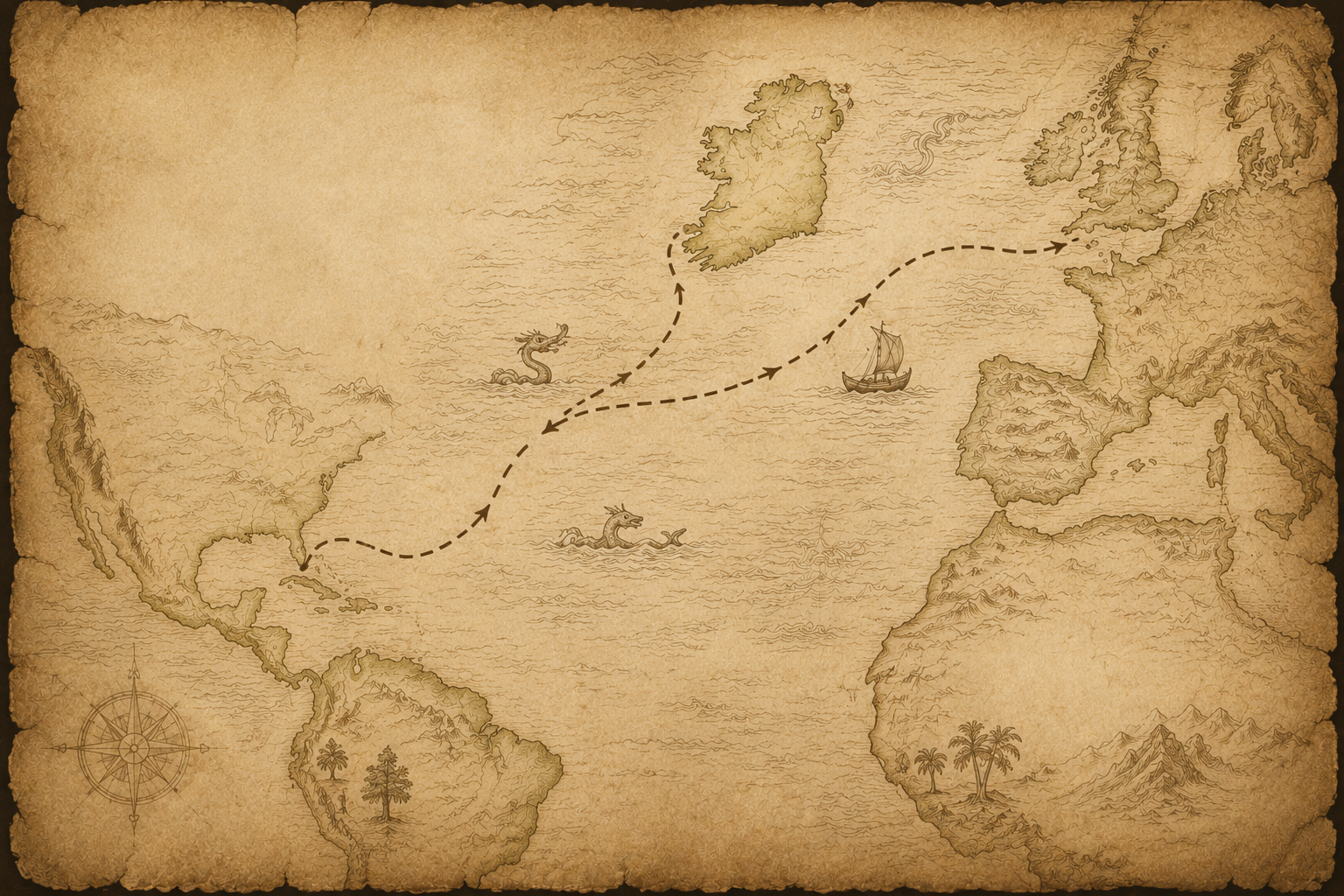
Long before the Viking voyages and nearly a thousand years before Columbus, Irish tradition tells of St. Brendan the Navigator, a sixth-century monk from County Kerry who sailed west into the Atlantic aboard a small leather-bound curragh in search of the Promised Land of the Saints.
His remarkable journey, recorded in the medieval manuscript Navigatio Sancti Brendani Abbatis, describes volcanic islands, towering sea cliffs, drifting ice, vast ocean creatures, and lands unlike anything known in Europe. While many regard the account as allegory, others believe it preserves memories of genuine Atlantic exploration.
In 1976, explorer Tim Severin built a traditional leather curragh using sixth-century techniques and successfully sailed from Ireland to Newfoundland. His expedition demonstrated that such a voyage was physically possible, reigniting debate over whether Irish monks may have reached North America centuries before the Norse.
The question has never been conclusively answered, but it sparked an idea that became one of the foundations of The Brandon House.
What if some of those monks travelled farther still? What if storms and Atlantic currents carried a small group beyond the known world, eventually finding passage along the coasts of the Americas? Could fragments of early Irish Christianity have survived far from home, preserved through encounters with entirely different civilizations?
In The Brandon House, that question becomes fiction. The novel imagines a small community of Irish monks reaching the coast of Peru, where their beliefs, knowledge, and traditions gradually intertwine with the Moche civilization. Over generations, history becomes legend, legends become myth, and the truth is buried beneath centuries of time, waiting to be uncovered.
Like every George Ryan adventure, the story begins with genuine history, authentic places, and unanswered questions. The adventure begins where the historical record ends, inviting readers to explore the fascinating space between what we know and what might have been.
COLCA CANYON
A LANDSCAPE CARVED BY TIME
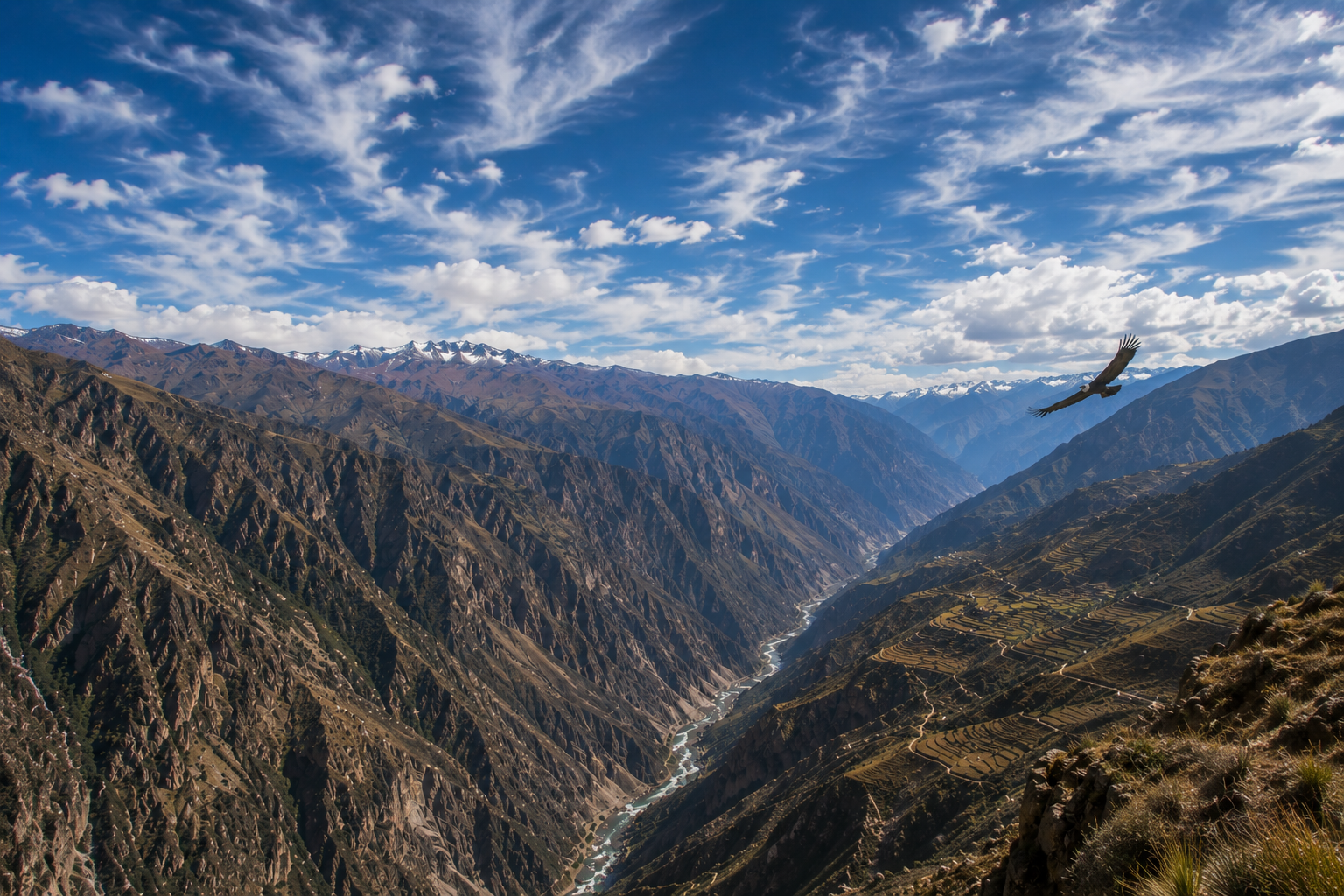
Twice as deep as the Grand Canyon in places, Colca Canyon is one of Peru's most spectacular landscapes. For thousands of years it has been home to thriving agricultural communities whose remarkable terraced fields still cling to the canyon walls today. Long before the arrival of the Inca, the Collagua and Cabana peoples transformed this rugged environment into a flourishing homeland, mastering irrigation, farming, and life at extraordinary altitude.
Towering cliffs, hidden valleys, and isolated villages have long given the canyon an air of mystery. Even today, many ancient trails disappear into remote ravines, abandoned settlements lie scattered across the mountainsides, and archaeological sites continue to reveal new pieces of Peru's pre-Columbian past. It is a landscape where history often remains hidden just beyond the next ridge.
The canyon is also one of the best places in the world to witness the majestic Andean Condor, whose three-metre wingspan carries it effortlessly on the rising thermals. Revered by Andean civilizations as a messenger between the earthly and spiritual worlds, the condor has become an enduring symbol of the region and appears throughout Peruvian mythology.
For centuries, stories have circulated of forgotten settlements, sacred valleys, and communities that vanished into the mountains as empires rose and fell. While many of these tales remain part of local folklore, the Andes still hold countless archaeological mysteries waiting to be explored.
That sense of possibility became central to The Brandon House.
In the novel, George Ryan's search for answers leads him from the rugged coastline of Ireland to the heart of the Peruvian Andes. Drawing inspiration from the history of the Moche civilization, early Christian traditions, and the enduring legends of St. Brendan's voyage, the story imagines how two distant worlds might have briefly intersected. The isolated valleys of southern Peru provide the perfect setting for a mystery where ancient beliefs, forgotten travellers, and long-buried secrets converge.
Like every location in the George Ryan series, Colca Canyon is a real place. The landscapes, history, and cultures are authentic. The adventure begins by asking one simple question:
What if history remembered only part of the story?


VIRACOCHA
CREATOR ❖ WANDERER ❖ MYSTERY
THE DEITY
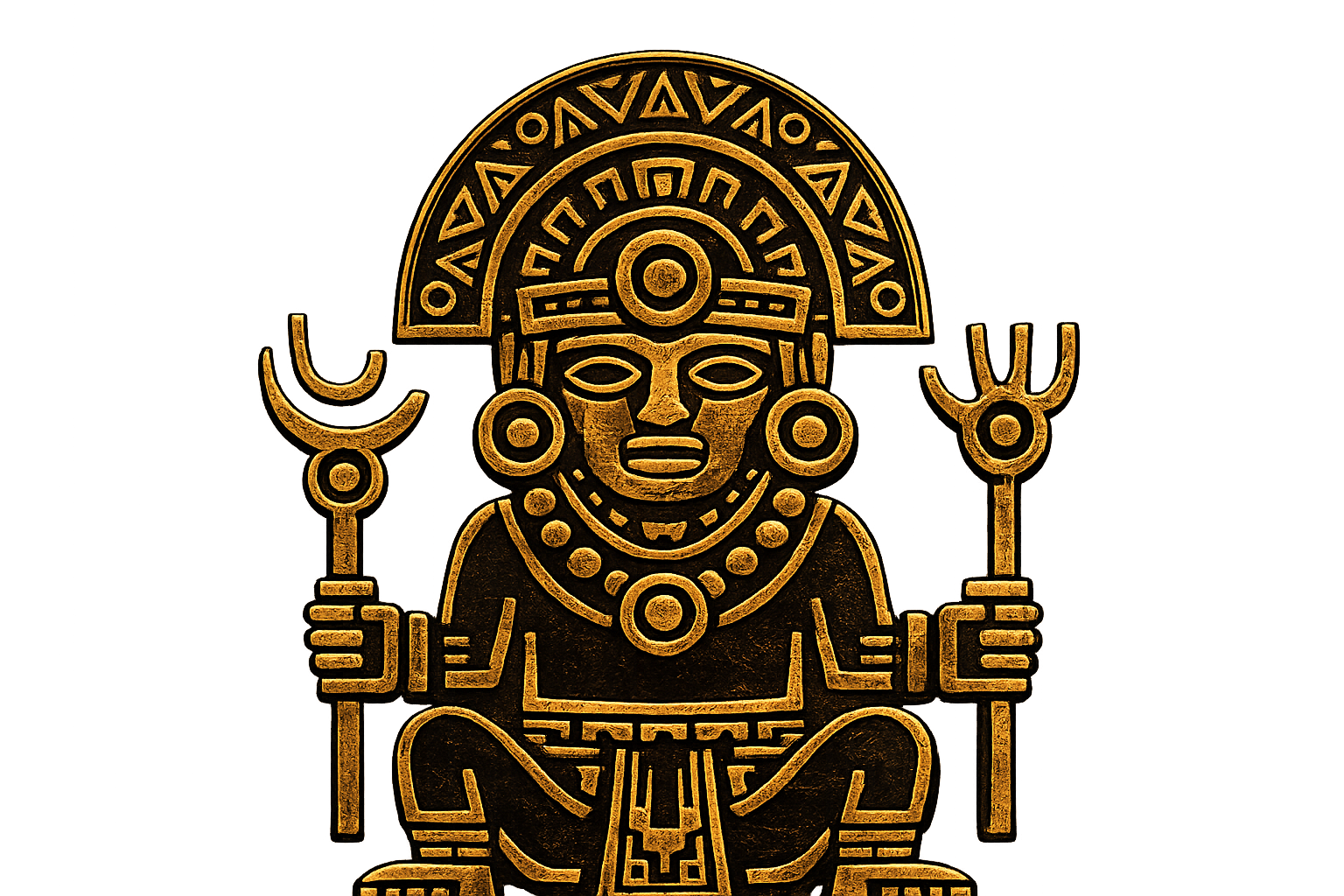
A powerful creator figure in Andean belief - associated with the origins of life, civilization and order.


THE LEGEND
Stories speak of red haired, bearded, and robed teacher who came from the sea, wandered the lands and departed.

THE QUESTIONS
Could ancient voyages have landed upon distant shores? History leaves traces for curiosity to attempt to connect them.
Machu Picchu
STONE ❖ SKY❖ SECRETS
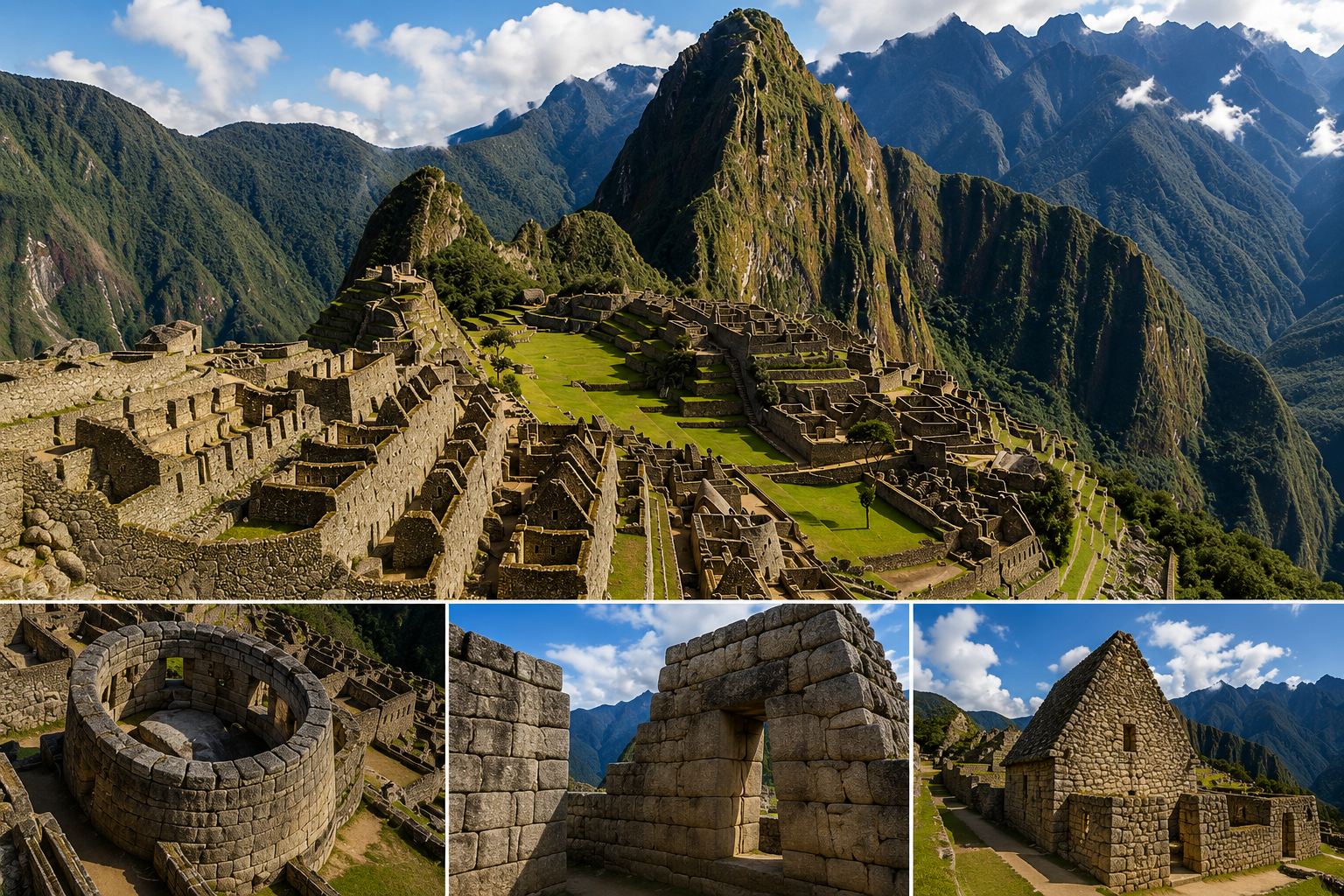
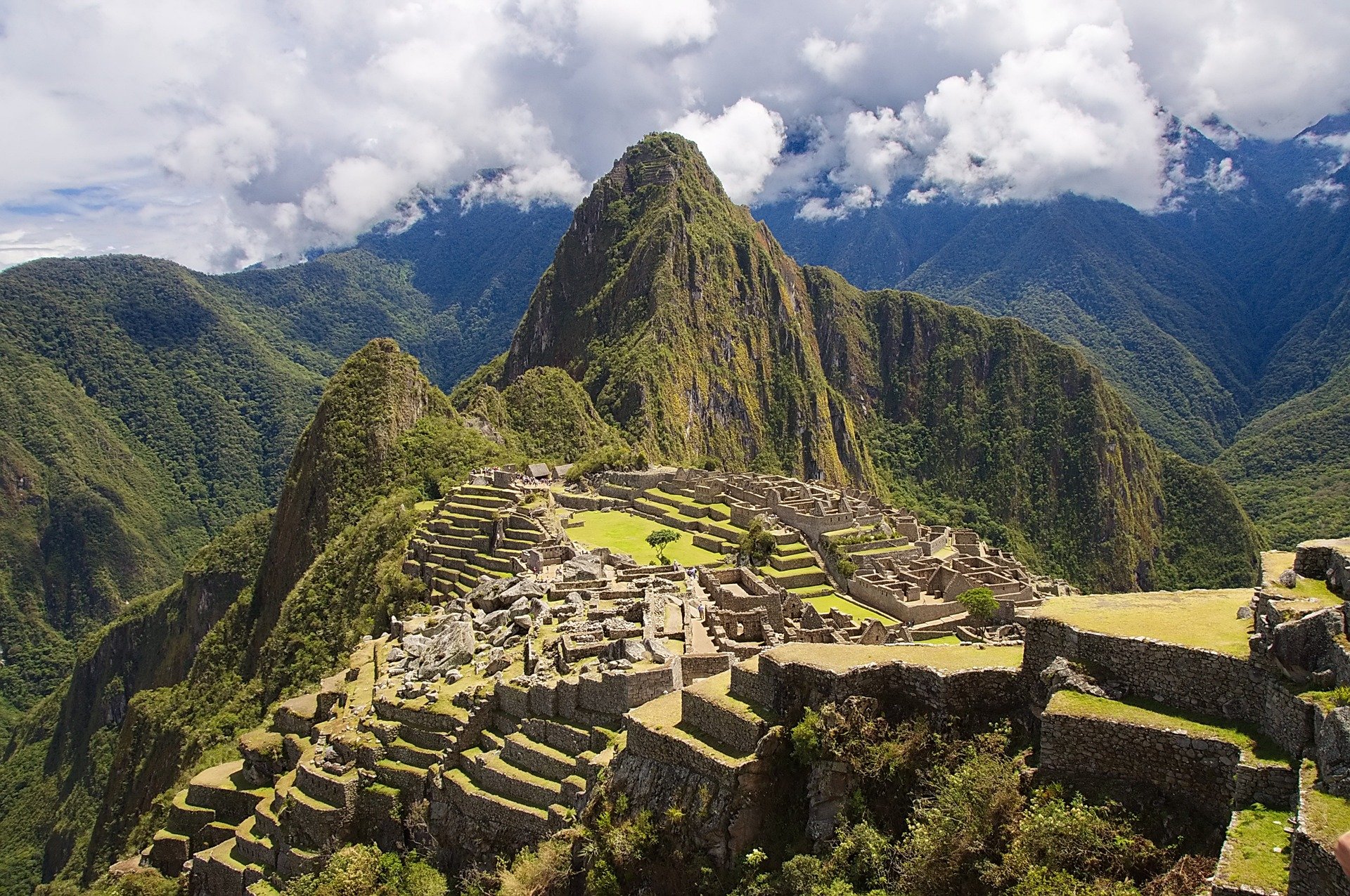
Perched high in the Peruvian Andes, Machu Picchu remains one of the world's greatest archaeological treasures. Built during the fifteenth century under the Inca emperor Pachacuti, the city was carefully positioned among towering peaks where engineering, astronomy, religion, and nature came together in remarkable harmony. Its precision stonework, terraced mountainsides, and sacred temples continue to inspire wonder centuries after its construction.
Although rediscovered by the outside world in 1911, Machu Picchu still guards many of its secrets. Historians continue to debate its full purpose. Was it a royal estate, a ceremonial centre, an astronomical observatory, or something more? Like many of history's greatest sites, it offers answers alongside new questions.
In The Brandon House, the legendary citadel becomes a stepping stone into a much deeper story, one that explores the Moche civilization, the legends surrounding St. Brendan's Atlantic voyage, and the possibility that distant cultures may have crossed paths centuries before conventional history suggests. The adventure is fictional, but the landscapes, archaeology, and enduring mysteries that inspired it are entirely real
EVERY PLACE
HOLDS A STORY